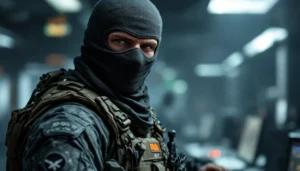
Call of Duty: United Offensive is one of the most pivotal expansions in first-person shooter history. Released in 2004 as the first major DLC for the original Call of Duty, this expansion didn’t just add content, it fundamentally shaped how online multiplayer gaming would evolve. While the vanilla game established the franchise’s credentials in the WWII setting, United Offensive took what worked and expanded it across new theaters of war, introducing features that competitive gaming communities still reference today. Whether you’re a seasoned Call of Duty player or exploring the franchise’s roots on PC or Xbox 360, understanding what United Offensive brought to the table explains why it remains a benchmark for multiplayer design even two decades later.
Table of Contents
ToggleKey Takeaways
- Call of Duty: United Offensive was the first major expansion pack released in 2004 that fundamentally reshaped multiplayer design and established the franchise as an esports powerhouse.
- The expansion introduced new game modes like Sabotage that prioritized team coordination and map control over individual kill-focused gameplay, becoming the competitive standard.
- United Offensive’s campaign featured three distinct theaters (North Africa, Sicily, and Eastern Front) with improved map design and squad AI that emphasized tactical positioning over lone-wolf playstyles.
- New multiplayer maps and weapons were rigorously designed with competitive feedback, featuring clear power positions and balanced loadouts that separated casual players from professional competitors.
- The expansion’s legacy extends far beyond 2004—its design philosophies around weapon balance, competitive structure, and team-based gameplay continue influencing Call of Duty titles and modern shooters today.
- Despite technical challenges accessing United Offensive in 2026, studying its historical impact and design innovations remains valuable for understanding how competitive gaming infrastructure evolved.
What Is Call Of Duty: United Offensive?
Call of Duty: United Offensive is a standalone expansion pack that extended the original Call of Duty beyond its European Theater focus. Released in September 2004, it introduced players to new campaigns set in North Africa, Sicily, and the Italian mainland, expanding the war effort narrative considerably. The expansion wasn’t just a seasonal update: it came as a full retail product on PC and later arrived on Xbox 360, bringing substantial new content across both single-player and multiplayer modes.
What made United Offensive distinct was its approach to expansion philosophy. Rather than copying the base game’s formula, it reimagined multiplayer progression with new game modes, weapons, and map design that felt fresh while maintaining the core gameplay that made Call of Duty resonate with millions of players. The expansion attracted both casual players hunting new single-player content and competitive clans grinding ranked matches online.
Development And Release History
Infinity Ward and Treyarch collaborated on United Offensive’s development, with Treyarch taking the lead on this expansion. The team had roughly a year post-launch to create meaningful new content that would justify a full retail release in a pre-DLC era. This was crucial, digital storefronts didn’t exist, so United Offensive needed to be substantial enough to justify shelf space at GameStop and other retailers.
The September 2004 PC release came less than a year after the original Call of Duty launched in October 2003. The expansion arrived at the perfect moment when the multiplayer community was hungry for new maps and competitive balance shifts. Later, it was ported to Xbox 360, though with some feature adjustments and different map selections compared to the PC version. The Xbox 360 version released in 2005, introducing console players to these new campaigns and establishing Call of Duty as a must-have franchise on Microsoft’s new hardware.
By modern standards, the development timeline was tight, yet the expansion never felt rushed. Each new weapon was playtested extensively in competitive environments, and map design reflected lessons learned from months of online play. This attention to quality set a precedent for how expansions should be handled, something that resonated through the franchise’s later entries.
Campaign Overview And Story
The campaign in United Offensive shifted focus from the European Theater to new battlefields that felt fresh but historically grounded. Three new campaigns, British forces in North Africa, American forces in Sicily and Italy, and Soviet forces on the Eastern Front, provided distinct perspectives on WWII’s later stages. The narrative wasn’t as cinematically tight as modern Call of Duty campaigns, but it delivered solid tactical scenarios that forced players to think about positioning and squad coordination.
Each campaign consisted of multiple missions with escalating difficulty. Unlike the base game, which focused heavily on scripted moments and linear level design, United Offensive introduced more open map layouts where player skill in combat mattered significantly. Veteran difficulty became notoriously punishing, enemies had faster reflexes, better aim, and more aggressive tactics that made lone-wolf playstyles risky.
New Maps And Locations
The new campaigns introduced several iconic locations that later became fan favorites. Gela in Sicily offered urban combat scenarios with tight alleyways and destroyed buildings. Kasserine Pass in North Africa featured more open terrain and vehicle support sections that broke up the standard infantry gameplay. Port of Messina presented night operations with reduced visibility, creating tension through atmosphere rather than just enemy count.
These locations weren’t just visual reskins, they fundamentally changed how missions played out. Gela’s verticality rewarded awareness of sightlines. Kasserine Pass demanded resource management and understanding cover positions across vast distances. Port of Messina’s darkness forced reliance on audio cues and muzzle flashes, creating a different sensory experience entirely.
Campaign Missions And Objectives
United Offensive featured 12 campaign missions split across the three theaters. Each mission combined straightforward objectives, reach the objective, eliminate the target, defend the position, with dynamic combat that kept players engaged even on replays. Mission design borrowed from the base game’s formula but refined it.
The British campaign missions in North Africa emphasized infiltration and tactical awareness. Players often faced overwhelming numbers and had to use terrain and cover effectively rather than charging through enemies. American missions in Sicily balanced intensity with narrative beats: you’d fight through villages, secure airfields, and witness pivotal historical moments. Soviet missions on the Eastern Front were unrelenting, the game’s designers pushed difficulty to brutal levels, requiring near-perfect execution to survive on higher difficulties.
One standout element was the use of squad AI. Unlike solo campaigns where you’re truly alone, United Offensive gave players fire teams that provided covering fire and helped manage enemy positions. This made the campaigns feel more like leading soldiers than just being a one-man army. The AI wasn’t sophisticated by modern standards, but it changed the tactical calculus significantly, you could actually use squadmates as distractions or supporting fire.
Multiplayer Features And Gameplay
United Offensive’s multiplayer was where the expansion truly justified its existence. The team introduced new game modes, weapons, and design philosophy that made competitive players take notice. Matches felt tighter, more strategic, and rewards were more clearly tied to actual performance rather than just time played.
New Multiplayer Modes
The expansion added Sabotage, Retrieval, and Capture the Flag (CTF) to the multiplayer suite. Sabotage became the competitive darling, two teams fought over bomb plants with clear objectives and tactical depth. Unlike Team Deathmatch, which rewarded kill-heavy playstyles, Sabotage demanded coordination, map control, and strategic planning.
Retrieval was essentially a one-flag CTF variant that played between rounds, keeping matches dynamic. CTF provided traditional territory control gameplay that appealed to clan-based competitive teams. These modes weren’t just content padding: they fundamentally changed how clans approached competitive structure and introduced role specialization, someone had to be the bomb planter, someone else the defender, and team composition mattered.
The competitive community embraced these modes immediately. Major tournaments shifted toward Sabotage as their primary competitive format. Teams developed strategies, practiced strats (strategic plays), and meta playstyles emerged around map control and timing.
Weapons And Equipment Additions
United Offensive introduced new weapons that shifted the multiplayer balance considerably. The M1 Garand got new variants optimized for different playstyles. The Thompson submachine gun became a close-quarters staple. New sniper rifles and shotgun variants expanded the viable loadout options beyond what the base game offered.
What mattered most was that each weapon felt distinct. The M1 Garand had a satisfying semi-automatic rhythm that rewarded headshots. The Kar98k sniper rifle had slower handling but superior damage. SMGs were viable for aggressive players willing to close distance. This variety meant players could develop signature loadouts that matched their playstyle without feeling like they were gimping themselves.
New equipment also included updated grenades and equipment slots that changed how players approached item management. Smoke grenades became essential for bomb plant setups. Claymores added defensive options for teams holding positions. The expanded equipment sandbox made team composition more nuanced.
Multiplayer Maps And Environments
United Offensive shipped with over 10 new multiplayer maps, each designed with competitive play in mind. Rostov was a tight urban environment where engagements happened at 15-30 meter ranges. Breakout featured more open terrain that rewarded teamwork and coordinated crossfire. Makin Island’s island setting created interesting sightline dynamics.
Map design philosophy in United Offensive differed from the base game. Maps had clearer power positions (high-ground locations that controlled the map) and more deliberate flow paths that funneled gameplay. This wasn’t accident, competitive feedback drove design iterations. Maps like Breakout became absolute staples in competitive circuits precisely because they rewarded skillful teamwork while punishing solo play.
Each map also shipped balanced across multiple game modes. A map that worked for Deathmatch might need adjustments for Sabotage’s objective-focused gameplay, and the designers handled this thoughtfully. Bomb plant locations weren’t arbitrary, they created tactical focal points that teams had to contest. Flag placements in CTF similarly created natural gathering points where strategy determined outcomes.
Tips And Strategies For Success
United Offensive’s expanded content meant players needed updated strategies to compete effectively. The expansion introduced mechanics and map knowledge requirements that separated casual players from competitive ones.
Campaign Tactics
Veteran difficulty in United Offensive campaigns demands tactical awareness. Enemies have better aim, faster reactions, and more aggressive positioning than lower difficulties. The key is understanding cover mechanics, stand exposed and you’ll be dead in seconds. Peek from solid cover, expose only minimal profile, and use the terrain to your advantage.
Using squad AI effectively matters more in United Offensive than the base game. Your squad provides suppressive fire, which means enemies can’t freely advance. Position squadmates where they create crossfire with your position. If you’re in a building, position squad members in different windows covering different angles. This creates kill zones where enemies have nowhere safe to move.
Grenades become essential problem-solving tools. Grenade spam isn’t viable (you run out), so grenades should be used strategically. If enemies hold a strong position, a grenade might flush them. If you’re pinned down, a grenade provides cover to advance or retreat. On veteran difficulty, learning when to throw grenades and when to save them is the difference between completing missions and repeatedly respawning.
Movement discipline is critical. Sprint everywhere and you’ll eat bullets before you can react. Move tactically from cover to cover, using game speed carefully. Lean around corners using the game’s lean mechanics rather than fully exposing yourself. These small adjustments compound significantly across an entire campaign.
Multiplayer Competitive Strategies
Competitive multiplayer in United Offensive operates on team coordination and map control. Individual skill matters, but team strategy matters more. This separated Call of Duty from some competitors who rewarded raw reflexes above teamwork.
In Sabotage, the team attacking the bomb site needs coordination. One player plants the bomb while teammates hold a perimeter, watching for rotations and counter-attacks. Defenders need players on bomb sites plus roaming defenders watching rotation routes. The attacking team needs smoke grenades to cover approaches and deny sightlines. Successful teams position these smokes predictably, allowing teammates to advance while staying hidden.
Map control wins matches. Controlling high-ground positions and power areas means you dictate engagements. Enemies trying to contest a power position you control are at a massive disadvantage. High-level teams don’t just run toward objectives, they secure surrounding areas first, creating buffer zones where their team dominates.
Class composition matters as much as individual skill. You can’t have four players with sniper rifles, you need close-range and mid-range players too. Good teams had designated roles: anchors (defensive players holding positions), slayers (aggressive players hunting kills), and objective players (plant/flag carriers). Role specialization meant practice time paid off through muscle memory and team synergy.
Communication separates good teams from great ones. Callouts about enemy positions, rotations, and utility usage let teammates react faster. A player spotting an enemy rotates can alert teammates to reposition. This game sense, developed through hours of scrim practice, is what esports professionals discuss when analyzing competitive play. Listen to high-level match commentary and you’ll hear constant communication driving tactical decisions.
Impact And Legacy In The Call Of Duty Franchise
Call of Duty: United Offensive didn’t just add content, it validated the expansion model for first-person shooters at a crucial moment in gaming history. Before digital distribution, expansions had to justify retail shelf space through substantial content. United Offensive proved this could work while maintaining quality.
The expansion’s competitive success established Call of Duty as an esports franchise. Before United Offensive, competitive shooters existed but lacked the infrastructure United Offensive’s design philosophy enabled. The Sabotage mode became the competitive standard format, spawning tournaments and professional teams that paid players to compete. Major LAN events like CPL (Cyberathlete Professional League) featured Call of Duty tournaments, and United Offensive drove significant portions of that competitive scene.
Design philosophies from United Offensive rippled through the entire franchise. Future Call of Duty titles learned from how multiplayer maps should be structured, how new weapons should be introduced, and how game modes could create depth beyond Deathmatch. The emphasis on team-based competitive play versus pure kill-focused gameplay influenced the franchise’s direction for years.
Weapon balance iteration also became a franchise hallmark, partly because of United Offensive’s approach. The expansion didn’t fear changing weapon stats post-launch to maintain balance. Players remember specific patches adjusting the M1 Garand’s damage or tweaking sniper rifle handling because these changes actually impacted how professionals played. This transparency about balance tuning built trust with competitive communities.
The expansion also proved cross-platform Call of Duty could work. The PC and Xbox 360 versions had differences (different map selections, adjusted weapon balancing for controller play), but both were fundamentally the same game. This foreshadowed how the franchise would eventually dominate across platforms decades later.
Critical Reception And Player Community
United Offensive arrived to positive reviews from the gaming press. Outlets praised the campaign variety and the competitive multiplayer additions. The expansion justified its price point through sheer content volume, 12 campaign missions across three different campaigns plus 10+ multiplayer maps meant dozens of hours of fresh gameplay.
Professional reviews from outlets like PC Gamer emphasized the multiplayer depth and how the new game modes added strategic dimensions missing from the base game. Critics noted that competitive players had immediately adopted Sabotage as their preferred format, suggesting the mode had genuine structural advantages over Deathmatch for team-based competition.
The player community embraced United Offensive enthusiastically. Clans that dominated the base game immediately moved to the expansion, and new competitive teams formed around the improved match structure. Forums and community sites hosted strategy discussions about bomb plants, map control positions, and weapon selections. This grassroots competitive community grew organically because the game design supported it.
One criticism emerged around balance in early months. Certain weapons dominated competitively, and some maps had sightline imbalances. But, the development team responded quickly with patches adjusting weapon stats and subtle map tweaks. This responsiveness built goodwill with the community, players knew feedback would be heard and acted upon.
Years later, nostalgia has cemented United Offensive’s reputation. Players who competed in that era speak fondly of the map design, weapon balance, and community feel. It’s frequently cited in “best Call of Duty” discussions, competing against much newer entries that boast prettier graphics and more content. That longevity speaks to how well the expansion was designed, it didn’t rely on graphical spectacle or trend-chasing. It was a solid, well-crafted product that respected players’ time and skill.
Long-standing clans that originated in United Offensive still exist today, recruiting new members but maintaining their historical roots. Some competitive players from that era transitioned into professional careers: United Offensive was where they learned competitive fundamentals that transferred to newer titles. That connection between casual fun and competitive viability was the expansion’s secret sauce.
How To Get And Play United Offensive Today
Getting United Offensive in 2026 requires navigating some legacy system realities. The expansion originated on PC in 2004, and while it’s technically playable today, the experience differs significantly from original conditions.
On PC, United Offensive can be purchased through Game Informer recommendations or legacy gaming platforms, though availability varies. The expansion requires the original Call of Duty to run. Steam does carry Call of Duty (the original), and some versions include the expansion. But, online multiplayer connectivity remains limited because official servers shut down years ago. Private servers and community-run alternatives exist but require additional setup.
The Xbox 360 version might seem more accessible since backwards compatibility is a buzzword, but United Offensive didn’t make the official backwards compatibility list. Used physical copies exist on eBay or other resale markets, but they require an Xbox 360 console (original, S, or E model) to play. The 360’s online service, Xbox Live, continues running for select legacy titles, though the population is negligible.
For modern players wanting to experience United Offensive’s gameplay design, examining newer Call of Duty entries provides better context. Many design principles introduced in United Offensive influenced later games. Playing the franchise’s recent entries will help you understand the foundations United Offensive established. Alternatively, watching recorded matches from competitive tournaments featuring United Offensive provides historical context and shows why the expansion mattered competitively. These recordings are available on YouTube and gaming archives, preserving how the game was actually played at high levels.
If you want specific multiplayer experiences United Offensive provided, checking out best Call of Duty discussions helps identify which modern titles preserved the design philosophies. Games like Call of Duty 4: Modern Warfare carried forward the competitive DNA, and Black Ops series maintained team-focused multiplayer modes inspired by United Offensive’s innovations.
For campaign experiences, modern Call of Duty titles offer significantly improved storytelling and production. Comparing United Offensive’s straightforward mission structure to contemporary campaign design shows how much gaming narratives have evolved, though some players prefer United Offensive’s direct approach without excessive scripting. Studying how campaigns work across the franchise helps you appreciate what United Offensive represented historically.
Conclusion
Call of Duty: United Offensive stands as a landmark expansion that proved how to expand a game while respecting what made the original special. The campaign provided quality single-player content across three new theaters. The multiplayer introduced game modes and design philosophy that became franchise standards. Competitive players still reference maps and strategies from United Offensive because the expansion was designed with both casual accessibility and competitive depth in mind.
The expansion’s true legacy isn’t just the content it added, it’s the foundation it built for how Call of Duty would evolve. Multiplayer design lessons, competitive structure, weapon balance philosophy, and community engagement approaches all trace back to what United Offensive pioneered. When you play modern Call of Duty titles, you’re engaging with design decisions that originated in 2004.
For players exploring the franchise’s history, United Offensive represents a crucial inflection point where a successful shooter evolved into a competitive juggernaut. While accessing the expansion today presents technical challenges given its age, understanding its impact remains valuable. Whether you’re researching franchise history or curious about how gaming design has progressed, United Offensive’s blueprint continues influencing shooters today.