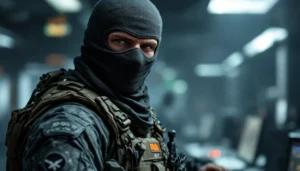
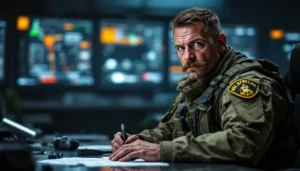
Call of Duty Zombies has been the backbone of undead gaming for nearly two decades, and it wouldn’t be half as compelling without the characters who’ve become legends in their own right. From the original four to the newer roster introduced in Cold War and beyond, each character brings unique flavor to the survival horror experience. Whether you’re drawn to their weapon preferences, special abilities, or the intricate storylines that define them, understanding these heroes is crucial to mastering the mode. This guide breaks down every major character you’ll encounter, their abilities, and what makes each one tick in 2026.
Table of Contents
ToggleKey Takeaways
- Call of Duty Zombies characters evolved from generic soldiers into fully realized personalities with interconnected storylines, deep motivations, and unique abilities across the Aether and Chaos universes.
- The original four characters—Richtofen, Dempsey, Nikolai, and Takeo—each bring distinct playstyles: Richtofen excels with precision weapons, Dempsey adapts to any loadout, Nikolai controls areas with heavy firepower, and Takeo masters melee combat.
- Cold War and recent titles shifted toward operator customization and loadout freedom, removing mechanical gatekeeping while preserving character personality and voice acting.
- Tank Dempsey is the best choice for beginners due to his well-rounded stats and weapon adaptability, while advanced players optimize character selection based on map strategy and specific abilities.
- Understanding character development across the Aether timeline reveals complex narratives where motivations shift from simple survival to philosophical questions about morality, making long-term investment deeply rewarding.
- Your playstyle improves significantly when you select a Call of Duty Zombies character whose personality matches your approach and commit to mastering their specific strengths over multiple playthroughs.
Origins Of The Zombies Characters: How The Cast Evolved
The Call of Duty Zombies cast didn’t emerge fully formed in day one. When Nacht der Untoten launched as a bonus mode in Black Ops, it featured four generic soldiers fighting waves of the undead. But what started as a simple survival gimmick evolved into one of gaming’s most beloved narrative experiences.
Over time, Treyarch transformed these soldiers into fully realized characters with motivations, histories, and interconnected storylines. The writers layered in Easter eggs, audio logs, and intentional narrative beats that rewarded dedicated players. Each new game brought fresh characters or alternate versions of existing ones, expanding both the Aether and Chaos universes.
The evolution accelerated with Cold War, which redesigned the entire progression system and introduced the Outbreak mode. Recent titles have continued experimenting with character customization and storytelling. Understanding this evolution gives context to why certain characters feel iconic while others represent newer directions the franchise has taken. The character roster today is far more diverse and complex than anyone could’ve predicted in 2008.
Original Four Characters: The Foundation Of Zombies
Richtofen: The Mad Scientist Architect
Edward Richtofen is the glue holding the entire Aether storyline together, whether you view him as villain or reluctant hero depends on your perspective. A German scientist working for Nazi Germany during World War II, Richtofen’s obsession with element 115 transformed him into something far more sinister than any zombie. His calm, measured voice contrasts sharply with the chaos around him, making him oddly menacing.
What sets Richtofen apart is his agency in the narrative. Unlike the other three, Richtofen actively orchestrates events rather than simply surviving them. His knowledge of teleporters, ancient artifacts, and dimensional mechanics shapes entire maps. Players who follow the Aether story closely discover Richtofen’s motivations shift from pure ambition to something more tragic and complex. His weapon preference leans toward higher-damage shotguns and precision rifles, rewarding measured, careful play.
Dempsey: The Soldier Of War
Tank Dempsey represents the everyman soldier, tough, straightforward, and absolutely brutal when cornered. An American GI dropped into the chaos of Zombies, Dempsey’s voice lines are quotable precisely because they’re unfiltered. He cracks jokes while chainsawing zombies, complains about perks, and generally treats the apocalypse like another job.
Dempsey’s strength lies in his adaptability. He performs well with almost any weapon loadout, making him perfect for players who experiment or haven’t found their rhythm yet. His dialogue reveals surprising depth, references to a girlfriend back home, regrets about past missions, and genuine moments of vulnerability punctuate his bravado. In competitive play, Dempsey remains the default pick for balance. His preference for assault rifles and submachine guns suits aggressive, room-clearing strategies.
Nikolai: The Hardened Red Army Commander
Nikolai Belinski started as a comedic relief character with a thick Russian accent but became far more compelling as the story progressed. A Red Army soldier who stumbled into Richtofen’s experiments, Nikolai’s casual alcoholism and dismissive attitude mask a soldier trying to survive an impossible situation. His voice acting, especially in later games, shifts to show genuine trauma and weariness.
Nikolai brings heavy-hitting utility to any squad. His preference for light machine guns and explosives suits area denial strategies. In the Aether story, Nikolai becomes crucial to the resolution, particularly in Black Ops 4’s final chapters. Players who pay attention to his character development notice he’s genuinely changed from the crude, simple soldier of the first games. His interactions with other characters feel earned rather than forced, especially with Richtofen.
Takeo: The Honorable Samurai
Takeo Masaki represents traditional Japanese culture and honor within the Zombies narrative. A soldier who values duty above all else, Takeo’s accent and mannerisms initially seemed like stereotypes, but Treyarch developed him into one of the most compelling characters. His fixation on honor, his references to his family, and his philosophical approach to the nightmare he’s trapped in give him unexpected depth.
Takeo excels with melee weapons and knife specialists throughout the franchise. His honor-based philosophy translates into precise, calculated playstyles rather than spray-and-pray tactics. In Black Ops 4, Takeo’s personal story reaches a climax that genuinely resonates with long-time fans. His bond with the other three, particularly with Nikolai, evolves from suspicious tolerance to genuine camaraderie. Players investing in Takeo’s character arc discover one of Zombies’ best-written narratives.
Secondary Characters & Expanding Roster
Notable Additions Across Black Ops Series
As the Aether storyline expanded, Treyarch introduced characters who coexisted with or directly impacted the original four. Sam Maxis appears as both a child and adult throughout the timeline, serving as the emotional anchor for the narrative’s stakes. Her appearances in Buried and subsequent maps reframe events from a new perspective, adding layers to established lore.
Maxis (Samuel Maxis), Sam’s father, functions as Richtofen’s opposite, another scientist, but one guided by different moral principles. His struggle against Richtofen forms the backbone of the Aether story’s central conflict. Players gradually discover that Maxis isn’t simply “good” and Richtofen “evil”, both have valid motivations twisted by extraordinary circumstances.
Marlton Johnson, Stuhlinger, Misty, and Russman formed the Black Ops 2 crew, bringing new perspective to the zombie apocalypse as modern-day survivors encountering the mystery. Each brought distinct personalities: Marlton the technical expert, Stuhlinger the conspiracy theorist, Misty the pragmatist, and Russman the old soldier. Their dialogue and character dynamics introduced fresh chemistry after years of the original four.
Cold War & Recent Era Characters
When Cold War launched, Treyarch pivoted to the Chaos storyline, introducing an entirely new cast while keeping the Aether threads alive. Carver Adler, Weaver, Gallo, and Deckard represent a different approach, operators closer to standard military personnel thrust into supernatural horror rather than the genre-blending absurdity of the original four.
These newer characters feel more grounded, lacking the eccentric personalities of their predecessors. The Chaos story plays as adventure-horror rather than dark comedy-horror. Recent seasons have expanded the operator roster to include crossover characters from standard multiplayer, allowing players to experience Zombies through multiple lenses. The approach splits the community, some miss the original cast’s chemistry, while others appreciate the fresh direction and broader customization options.
Outbreak mode introduced even more flexibility, letting players select from an expanded roster and experience episodic zombie scenarios outside the traditional map structure. This evolution reflects where Call of Duty is heading: player choice and customization over fixed character narratives.
Character Abilities & Perks That Define Playstyles
Unique Traits & Special Powers
While early Zombies games treated all characters mechanically identical, modern versions layer passive abilities and special perks directly tied to character identity. In Black Ops 4, each of the original four received unique GobbleGums tied to their personalities, Richtofen’s manipulated machine behavior, Dempsey received weaponry buffs, Nikolai gained armor advantages, and Takeo accessed melee bonuses.
Cold War moved toward operator-specific field upgrades and loadout customization rather than hard-coded character traits. This freed players to build characters according to playstyle rather than being locked into predetermined roles. A player wanting to run Adler with a sniper-focused loadout can do so without compromise. The system feels less restrictive, though it removes some character identity that old-school fans cherished.
Perks themselves remain universal, all characters can grab Jug, Speed Cola, Double Tap, and others, but how quickly characters get perks and their optimized loadouts varies. The original four feel baked into specific perk combinations that maximize their effectiveness. Richtofen with Pack-a-Punch weapons and crowd control perks, Dempsey with aggressive offense-focused builds, Nikolai with area denial, and Takeo with close-quarters setups all feel intentional.
Weapon Preferences & Starting Loadouts
Starting weapons differ by character in some versions, with Richtofen typically beginning with a pistol emphasizing precision, while Dempsey grabs something more forgiving. These distinctions matter in early rounds when ammo is precious and every shot counts. By round 3-4, starting weapons become irrelevant, but the early-game preference reflects character philosophy.
In Cold War, weapon selection becomes completely customizable through loadout creation. Players can theoretically build any operator for any role. But, voice lines and animations still carry character DNA, Richtofen’s calm demeanor suits calculated, methodical play, while Dempsey’s aggressive persona matches run-and-gun strategies. A skilled player will adapt their playstyle to their character’s personality rather than fighting against it.
The Pack-a-Punch system rewards character consistency. Running the same character across multiple playthroughs builds familiarity with their weapon handling, reload animations, and voice callouts. Long-time players develop muscle memory tied to specific characters, making switching mid-season feel awkward even if mechanically identical.
The Story Behind The Chaos: Narrative Arcs & Character Development
Aether Storyline: The Original Campaign
The Aether timeline follows the original four characters across decades and dimensions, exploring their descent into Richtofen’s web and their desperate search for escape. What began as simple survival evolved into a complex narrative involving time travel, alternate dimensions, and ancient civilizations. The story reached its climax in Black Ops 4 with a divisive ending that either satisfied long-time players or left them frustrated, depending on personal investment.
Character development in Aether feels earned because it happens slowly across years of development. Tank Dempsey isn’t suddenly deep: his evolution comes through audio logs, radio conversations, and Easter egg steps that reward attention. Nikolai’s journey from comic relief to tragic figure happens organically. Takeo’s honor code provides philosophical contrast to the chaos, making his moments of vulnerability hit harder. When fans invest hours into piecing together story fragments, discovering that each character has motivations, regrets, and growth patterns, the payoff feels monumental.
Richtofen’s character arc deserves special mention. He transforms from seemingly straightforward villain to someone whose actions, while terrible, stem from comprehensible, if twisted, logic. The Aether story asks uncomfortable questions: Is Richtofen evil, or is he a victim of circumstance? By the end, players understand his perspective even if they don’t agree with his choices. That complexity is why the Aether storyline endures even though its convoluted timeline.
Chaos Storyline: A Fresh Direction
The Chaos universe premiered in Black Ops 4’s “Ancient Evil” map and continued through Cold War, offering a different narrative approach. Rather than sci-fi horror with time-travel elements, Chaos leans into supernatural horror with mythology, ancient curses, and eldritch threats. The tone feels less comedic, more genuinely threatening.
Chaos characters like Carver Adler and his team feel less developed than the original four, partly because the timeline is shorter and partly because Treyarch hasn’t invested the same narrative depth. The story involves escaping cursed locations and fighting literal demons, which is fun but lacks the character-driven weight of Aether. Cold War expanded Chaos lore, introducing motivations for Adler and hints at larger conspiracies, but dedicated players often prefer the original four’s interconnected journey.
The divergence between Aether and Chaos represents gaming’s natural evolution: some franchises benefit from completely fresh stories rather than endless sequels. Chaos lets new players jump in without needing to understand decade-old lore. But, the depth gap between timelines remains noticeable. Old-school fans appreciate the Aether conclusion, while newer players discover Chaos as their entry point. Both exist in the current game state, and both offer legitimate reasons to play. Game walkthroughs and tier lists on Game8 provide detailed breakdowns of both storylines if you want comprehensive coverage.
How To Choose Your Perfect Zombies Character
Character Selection For Beginners
If you’re starting fresh, Tank Dempsey remains the safest pick. His well-rounded stats, straightforward personality, and lack of specific gimmicks make him forgiving for new players. You won’t feel constrained by character-specific mechanics, and his weapon adaptability suits experimental playstyles. Plus, his voice lines are entertaining without being distracting.
Focus on learning map layout, perk priority, and gun efficiency before worrying about character synergies. Any character performs fine if you master the fundamentals. A skilled player carrying Takeo plays better than an average player struggling with Richtofen’s playstyle requirements. But, new players benefit from characters whose personalities match their preferred approach, aggressive players vibe with Dempsey, while methodical players appreciate Richtofen.
For Cold War specifically, the operator system is more forgiving since you build loadouts from scratch. Pick a character whose aesthetics appeal to you rather than overthinking mechanical optimization. The differences become negligible until you reach higher difficulty tiers.
Advanced Player Preferences & Strategies
Competitive and high-round players optimize character selection for specific strategies. Nikolai becomes essential for area-denial setups, his heavy-damage weapons scaling better with Pack-a-Punch multipliers. Richtofen suits puzzle-heavy maps where his weapon precision and calm demeanor reduce mistakes during high-stress moments. Takeo excels in melee-focused builds, particularly on maps with confined spaces.
The original four’s ability synergies shine when you understand their design intentions. Running optimal loadouts for each character’s preferred playstyle increases efficiency measurably. Watch high-tier players on Game Rant to see how pros match characters to strategy rather than picking based on preference alone.
In Cold War’s Outbreak mode, character selection matters less since maps rotate and strategies shift constantly. Pick whoever you main and build your loadout around the map’s specific challenges. The flexibility Outbreak provides removes hard-counter scenarios where one character completely outclasses another.
Eventually, your favorite character wins over theoretical optimization. You’ll perform better playing someone you enjoy hearing all round than someone mathematically superior but annoying. The mental edge from enjoying your character’s personality and voice acting translates to better decision-making and faster reaction times. Spend a few matches with each character in lower difficulties to find your rhythm, then stick with them long enough to develop genuine comfort.
One final consideration: newer players should explore the zombie guides and how-to articles available to understand how character matchups affect different map strategies. What works on Nacht won’t necessarily work on Kino, and character selection becomes more important when map design heavily favors specific abilities or playstyles.
Conclusion
Call of Duty Zombies characters transformed from generic soldiers into some of gaming’s most memorable personalities. Whether you’re drawn to the original four’s tragic narrative across the Aether timeline, or you prefer Chaos’s fresh-start approach, each character brings distinct flavor to the survival experience. The original four remain iconic for good reason, their development feels organic, their interactions feel earned, and their individual stories resonate with players who invested years understanding their journey.
The recent expansion to Cold War and beyond democratized character choice through operator customization, removing mechanical gatekeeping while preserving personality. This approach lets more players find their perfect character match without feeling forced into specific roles. As Call of Duty Zombies continues evolving in 2026 and beyond, character development will likely remain central to keeping players invested beyond just mechanics and strategy.
Your choice of character eventually shapes how you experience the mode. Pick someone you genuinely enjoy hearing, whose personality aligns with your preferred playstyle, and commit to mastering their specific strengths. Whether that’s Richtofen’s calculated precision, Dempsey’s adaptability, Nikolai’s raw power, or Takeo’s disciplined approach, every character rewards dedicated players with unique advantages and unforgettable moments. The beauty of the current roster is that there’s someone for everyone, you just need to find your character and start surviving.