Call of Duty’s visual identity hasn’t just shaped the franchise, it’s shaped how we expect first-person shooters to look on store shelves and digital platforms. From the gritty soldiers staring straight ahead to the minimalist compositions of recent titles, Call of Duty cover art tells the story of how the gaming industry itself has evolved. For over two decades, Infinity Ward, Treyarch, and other development teams have used cover design to signal what’s inside: the era, the tone, the gameplay promise. Whether you’re a collector hunting down original cases or a digital-first gamer scrolling through the PlayStation Store, understanding how and why these covers changed reveals something deeper about game marketing, player expectations, and artistic direction. This article dives into the complete history of Call of Duty covers, from the iconic black soldiers of the early Modern Warfare era to today’s sleeker, platform-adaptive designs.
Table of Contents
ToggleKey Takeaways
- Call of Duty cover art has evolved from realistic soldier renders to minimalist, symbolic designs optimized for digital storefronts and platform thumbnails.
- Modern Call of Duty covers must work across multiple formats—console stores, mobile devices, Steam, and Game Pass—requiring bold typography and simplified compositions for clarity at small sizes.
- Regional variations in Call of Duty cover design reflect different cultural sensitivities, regulatory requirements, and market expectations across Japan, Europe, China, and other territories.
- Special edition covers, such as the Ghost Edition of Modern Warfare II, transformed packaging into collectible art objects, justifying premium pricing through premium design and materials like metallic finishes and embossing.
- Great Call of Duty cover design balances marketing appeal with artistic vision, requiring instant recognition, clear communication of game identity, and visual impact to cut through crowded digital marketplaces.
- Future Call of Duty covers will likely embrace increased abstraction, interactive design elements, esports-inspired aesthetics, and more diverse character representation while maintaining the franchise’s iconic brand identity.
The Importance Of Cover Art In Gaming
Why First Impressions Matter For FPS Franchises
A cover is a contract between developer and player. In the crowded FPS marketplace, cover art is often the first (and sometimes only) thing a potential buyer sees before committing $60–$70. For Call of Duty specifically, this matters more than most franchises because the series has released a new entry almost every single year for nearly two decades. Without distinctive cover design, players might confuse Black Ops III with Black Ops IV, or Modern Warfare 2019 with Modern Warfare II 2022.
Early FPS games didn’t worry much about cover differentiation. The original Call of Duty (2003) had a relatively understated cover, a soldier in muted colors. But as the franchise exploded in popularity, cover became a tool for instant recognition. Casual players walking down the GameStop aisle needed to know, at a glance, whether they were picking up a Modern Warfare game or Black Ops. Competitive players and collectors relied on cover art to identify specific editions with different map packs, cosmetics, or campaign variations. The cover became a badge of identity.
For a franchise that dominates esports and casual gaming simultaneously, cover design had to work across both audiences. A cover that appeals only to hardcore players alienates the casual market: one that’s too generic fails to create excitement among the community that’s been waiting months for launch day.
How Cover Design Influences Purchase Decisions
When gaming journalists reviewed Call of Duty titles on major platforms like Game Informer, they didn’t just evaluate gameplay, they discussed the visual presentation, including promotional art and box design. Why? Because modern consumers make purchase decisions faster than ever. Aggregated review scores on Metacritic matter, but so does the visceral reaction you get from seeing a cover in a video or screenshot.
Studies in retail and marketing show that packaging design influences buyer psychology significantly. For video games, this is amplified: you’re not just buying a product, you’re buying a promise of an experience. A powerful cover, one with a recognizable protagonist, striking colors, or a clear thematic statement, signals confidence in the product. It says, “This is worth your time and money.” Conversely, a bland or confusing cover can tank pre-orders or digital storefront impressions, even if the game itself is excellent.
Special edition covers amplify this effect. When Activision released the Ghost edition of Modern Warfare II with a premium metallic box and Lieutenant Ghost’s iconic skull mask as a centerpiece, that cover became a status symbol. Players weren’t just buying a game, they were buying a collectible, a statement. The cover transformed from marketing tool to part of the product experience itself. This is especially true on console, where physical boxes still sit on shelves and merit display.
Evolution Of Call Of Duty Cover Design Across Generations
Early Era: Black Ops & Modern Warfare Aesthetics
The original Modern Warfare (2007) and Modern Warfare 2 (2009) established the visual template that would dominate Call of Duty covers for a decade. Both featured hyper-realistic soldiers rendered in 3D, positioned center-frame or in dynamic action poses. The color palettes were desaturated, lots of blacks, grays, sand tones, and muted metallics. There was minimal text, and the title often appeared in a bold, military-inspired sans-serif font. The message: serious warfare, real soldiers, tactical authenticity.
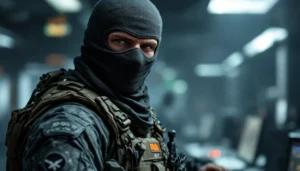
Black Ops (2010) introduced a different visual language while maintaining that gritty soldier-focus aesthetic. The covers featured characters wearing tactical gear and balaclavas, often shown in more dramatic lighting or dark environments. Black Ops covers felt slightly more mysterious than Modern Warfare covers, there was espionage in the design, a hint of shadow ops work. Black Ops 2 elevated this with a futuristic twist, adding orange and neon accents to signal the near-future setting (2025) without abandoning the core soldier-centric design.
Throughout this era (2007–2015), the formula was consistent: human protagonist front and center, realistic rendering, military-appropriate color scheme, minimal distracting elements. This approach worked because it immediately communicated what the game was about. You saw a soldier, you thought “realistic military shooter.” The cover backed up the marketing promise. Call of Duty Black Ops and Modern Warfare covers became instantly identifiable in stores and online.
The Minimalist Shift: Recent Title Approaches
Starting around Modern Warfare (2019) and accelerating through Black Ops Cold War (2020) and Modern Warfare II (2022), Call of Duty covers became noticeably less soldier-centric and more abstract. Modern Warfare 2019’s cover featured Captain Price, but the rendering was more stylized, the color grading more cinematic. Cold War went further: the cover used bold typography, cryptic imagery (like an eye symbol), and vibrant blues and magentas. It felt less like a tactical manual and more like a spy thriller poster.
Modern Warfare II’s cover is perhaps the clearest example of this shift. It’s far more minimalist than MW2 (2009). The focus isn’t on realistic soldier rendering but on symbolic imagery, a skull, a knife, harsh lighting, and typography that dominates. The design feels closer to movie posters than to the photorealistic game boxes of the PS3 era.
Why the shift? Several factors converged. First, digital storefronts (PlayStation Store, Xbox Game Pass, Steam) don’t display physical boxes, so highly detailed 3D soldier renders became less necessary. A cover that reads well as a small thumbnail on a digital shelf needs to be bolder, more iconic, less photorealistic. Second, the franchise faced increasing criticism about whether its soldier representation felt authentic or tokenistic. Moving away from hyper-realistic soldier portraits toward more symbolic, thematic imagery gave designers freedom from that scrutiny. Third, competitive gaming and esports pushed toward more aspirational, stylized visuals. A minimalist cover appeals to both casual players and the competitive scene.
Recent titles like Call of Duty: Modern Warfare III (2023) and Black Ops 6 (2024) continue this trend, using bolder colors, stronger typography, and less reliance on photorealistic character models. The covers have become posters you’d hang on your wall, not just boxes you’d toss on a shelf.
Iconic Call Of Duty Covers That Defined The Franchise
Modern Warfare Series Cover Art Legacy
The Modern Warfare 2 (2009) cover is arguably the most iconic in the franchise. It featured three soldiers in tactical gear, set against a dark background with a faint sunset glow. The composition was dynamic without being chaotic, each soldier had a role, a stance, a purpose. The title appeared in massive, aggressive sans-serif letters. This cover became the visual standard for military shooters for the next five years. It was copied, homaged, and parodied so much that other FPS franchises had to work hard to differentiate themselves.
Why did MW2’s cover endure? Partly because the game was an absolute cultural phenomenon. MW2 wasn’t just a great game, it was the game. Gamers had it, competitive players streamed it, and casual audiences owned it. The cover became synonymous with the entire generation of console gaming. When people think of a “Call of Duty game,” many still imagine that MW2 aesthetic: tactical operators, military professionalism, high-stakes tension.
Modern Warfare 3 (2011) and Modern Warfare (2019) both tried to recapture that magic with varying degrees of success. MW3 played it safe, using a similar three-soldier composition. Modern Warfare 2019 was grittier and darker, focusing on Captain Price’s weathered face and using cooler color tones. Each carried the weight of MW2’s legacy, and struggled to step fully out of its shadow.
Black Ops Franchise Visual Identity
While Modern Warfare covers said “realistic military,” Black Ops covers said “espionage with edge.” Black Ops (2010) featured soldiers with balaclavas and dark lighting, creating a mysterious, covert-ops vibe. Black Ops 2 amplified this with a futuristic aesthetic: neon oranges, cybernetic themes, and a protagonist (Mason/Woods) rendered in a more stylized way than typical Modern Warfare soldiers.
Black Ops: Cold War (2020) represented a major departure. Instead of focusing on soldiers, the cover centered on abstract, thematic imagery, an eye, cryptic text, bold color blocks of blue and magenta. The design felt more like a 1980s spy thriller than a traditional FPS box. Crucially, it worked. Cold War was a massive success even though (or because of) its unconventional cover design. It signaled that the Black Ops franchise was willing to be experimental visually, which matched the game’s tone shifts and campaign themes.
Black Ops 6 (2024) continued this approach with even bolder design choices, using darker backgrounds and focusing on typographic hierarchy over character imagery. For collectors and fans, Black Ops covers have become collectible art objects in their own right, they’re displayed on shelves not just as game boxes but as pieces of franchise history.
Call Of Duty Warzone & Multiplayer Cover Variations
The rise of Warzone (2020) created a new challenge for cover design: how do you promote a free-to-play battle royale that’s integrated with multiple premium releases? Warzone didn’t have a traditional “box” to design for, but its seasonal promotional art became incredibly important. Seasonal trailers, cosmetic releases, and battle pass marketing all relied on eye-catching cover-style artwork.
Warzone covers, and the promotional art for seasonal events, tended to be more action-oriented than the main campaign-focused covers. A Warzone cover might feature multiple operators in combat poses, heavy weaponry, and explosions. It had to convey “high-stakes multiplayer action” rather than campaign narrative. This was a visual departure for the franchise, which historically separated campaign (dramatic, thematic) from multiplayer (tactical, energy-focused) aesthetics.
Multiplayer-focused covers, especially for bundle releases and cosmetics, evolved to match current gaming culture. They became more vibrant, less photorealistic, and more aligned with competitive esports aesthetics. Covers for cosmetic bundles, Ghost’s operator skins, for example, took on promotional poster qualities, similar to what you’d see in anime or stylized action media.
For digital storefronts, these variations multiplied. The PlayStation Store version of Modern Warfare II might look slightly different from the Xbox version, and the mobile/tablet-optimized versions required additional redesigns. Managing this visual portfolio became part of the larger challenge of cover design in the modern era.
Regional Differences In Call Of Duty Cover Art
How International Markets Influenced Design Choices
Call of Duty is a global franchise, but cover art isn’t always universal. Different regions have different expectations, regulatory requirements, and cultural sensitivities. This has forced Activision and its development partners to maintain multiple versions of covers for the same game.
Japan, for example, has strict regulations around depictions of violence, weapons, and military imagery. Japanese covers for Call of Duty games are sometimes significantly different from North American versions. Where an American cover might feature a soldier with a rifle, the Japanese version might emphasize other design elements, bolder typography, abstract imagery, or different color grading. This isn’t censorship exactly, but rather a recognition that marketing materials need to resonate within local cultural contexts. A hyper-realistic soldier holding a rifle might not feel authentic to Japanese audiences, or might trigger different regulatory scrutiny, so Japanese covers adapted.
Europe also had variations, particularly in Eastern European markets where military games had different historical connotations. A cover that felt like an action-packed power fantasy in the U.S. might feel insensitive in a country with recent military conflict in its history. Activision addressed this by using more abstract designs, different imagery, or adjusted color palettes in certain territories.
China presented unique challenges. For years, Call of Duty wasn’t officially available in mainland China due to regulatory restrictions. When regional versions were eventually considered or released through partnerships, covers had to comply with Chinese government guidelines about military imagery, depictions of violence, and political messaging. Some Call of Duty promotions in China featured entirely reimagined cover art that bore little resemblance to the Western version.
Mobile and regional editions also drove cover variations. Call of Duty: Mobile, released globally but with region-specific servers and cosmetics, had cover art tailored to different regions. Southeast Asia got covers emphasizing certain operators or weapons: Middle Eastern regions had adjusted imagery. This fragmentation meant that by the Modern Warfare era, a single game could have 5–10 different “official” covers depending on platform, region, and edition.
These regional differences weren’t always documented or publicized by Activision. Collectors and gaming historians had to track them down themselves. But, they reveal an important truth: cover art isn’t just creative expression. It’s also diplomatic, regulatory, and culturally sensitive work. The best Call of Duty games needed covers that worked everywhere, which is a much harder design challenge than it appears.
Special Edition & Collector’s Box Covers
Premium Packaging & Limited Release Designs
While standard editions set the baseline for cover design, special editions pushed the boundaries. Modern Warfare 2 had a Prestige edition that featured a night-vision goggle effect on the cover, along with steelbook packaging and exclusive cosmetics. Black Ops and Black Ops 2 had collector’s editions with premium printing, metallic accents, and alternative cover art. These weren’t just slightly different boxes, they were entirely separate design statements.
The Ghost Edition of Modern Warfare II (2022) is a recent example that perfectly encapsulates how far special edition covers have evolved. Instead of a traditional printed box, the Ghost edition came in premium packaging featuring metallic finishes, embossed details, and a focus on the iconic skull mask. The cover was less of a marketing tool and more of a luxury product presentation. Collectors paid a significant premium (often $150–$200 for the full edition) partly for the game itself and partly for the collectible box and artwork.
Limited regional releases also drove unique covers. The Black Ops Zombies Deluxe edition, available in certain territories, featured different artwork emphasizing the undead theme. Call of Duty Black Ops 1 Zombies covers for special editions highlighted the Zombies mode more prominently than standard campaign-focused covers, understanding that zombie mode enthusiasts were a distinct market segment with distinct visual preferences.
Steelbook editions became increasingly common starting with Modern Warfare (2019). These metal cases required simplified, bold designs that could be printed onto steel without losing clarity or color fidelity. Steelbook covers often featured minimalist art, strong typography, and high-contrast color schemes. They became collector’s items themselves, gamers would buy the steelbook version specifically for the premium case, even if they’d already played the game.
Pre-order bonuses also drove cover variations. GameStop, Amazon, Best Buy, and other retailers would offer exclusive cosmetic packs or campaign DLC with pre-orders, and each version might have slightly different box art or packaging materials to differentiate them. This created a complex ecosystem where a single game could have 10+ distinct physical versions, each with unique cover art.
From a design perspective, special edition covers had to balance premium aesthetics with practical functionality. A cover needed to look impressive on a shelf, but also had to be durable, printable, and still clearly identify the game inside. Metallic inks, embossing, and unusual materials pushed printing boundaries. Some limited editions even featured lenticular covers (3D holographic effects that change as you move the box), though these remained relatively rare due to cost.
Digital Era: How Cover Art Adapted For Online Platforms
From Physical To Digital: The Design Transition
The rise of digital distribution fundamentally changed how cover art functioned. When you buy Call of Duty on the PlayStation Store, you don’t see a physical box. You see a digital thumbnail, usually around 200–400 pixels wide, displayed in a grid alongside hundreds of other games. The cover art has 2–3 seconds to grab your attention before you scroll past. This technical constraint forced design decisions that cascaded through the entire visual identity.
Physical covers could rely on details that worked at arm’s length, the weathered texture of a soldier’s face, subtle color gradations, small text elements. Digital covers needed to work as thumbnails. This meant bolder colors, larger typography, simpler compositions, and higher contrast. A cover that looked great on a shelf could be completely illegible as a 300-pixel square.
Developers also had to account for different aspect ratios and display sizes. A physical box has a standard 4:3 ratio. Digital covers needed to adapt to:
- Square thumbnails (1:1) for storefronts like the PlayStation Store
- Vertical artwork (portrait) for mobile game launchers
- Widescreen (16:9) for promotional banners and trailers
- Custom sizes for different platform templates (Steam, Epic Games Store, Xbox Game Pass)
Designs that worked across all these formats required simplification and abstraction. This partly explains the shift from hyper-realistic soldier renders to minimalist, symbolic imagery. A detailed 3D soldier face doesn’t scale down: a bold typographic design or strong color block does.
The digital era also introduced versioning chaos. Call of Duty: Modern Warfare exists as:
- Standard Edition cover (different sizes for different stores)
- Battle Pass promotional art (seasonal variations)
- Bundle covers (each cosmetic bundle had its own art)
- Regional variations (adjusted for different markets)
- Console-specific art (PS5 version vs. Xbox Series X)
A single game might have 50+ “official” cover variations across all platforms and regions.
Call Of Duty Store & Platform-Specific Covers
The Call of Duty Store (in-game cosmetic shop) introduced a new layer of cover design. Each bundle, operator skin, or weapon blueprint got its own promotional artwork, essentially mini-covers designed to sell cosmetics. These ranged from simple product shots to elaborate thematic scenes. A Ghost operator bundle might feature Ghost in action, while a limited-time Halloween bundle might use spookier, more stylized art.
Platform-specific covers became the norm. When Modern Warfare released on next-gen consoles (PS5, Xbox Series X
|
S), the cover art was slightly adjusted to be optimized for each platform’s store UI. Microsoft’s ecosystem emphasized different visual elements than Sony’s, so the cover variants reflected those differences. Purple Call of Duty cosmetic promotions, for instance, had covers that highlighted purple neon elements to match seasonal themes.
Steam had its own requirements. Valve’s storefront emphasized certain design elements, large game logos, clear price displays, concise key information. Steam covers for Call of Duty games were optimized for this template, often looking quite different from PlayStation Store or Xbox versions of the same game.
Mobile presents entirely different constraints. Call of Duty: Mobile runs on devices with vastly different screen sizes, from small phones to tablets. Cover art for the launcher needed to look good at multiple resolutions without losing clarity or visual impact. Mobile covers tended to be bolder, with less fine detail, compared to console versions.
The Game Pass era introduced yet another wrinkle. When Call of Duty White Ops and other titles arrived on Xbox Game Pass, they needed cover art optimized for Microsoft’s subscription service interface. Game Pass covers often featured promotional messaging (“Included with Game Pass”) and distinctive branding that differentiated them from standard purchase versions.
Managing all these variations became a significant logistical challenge for Activision. A single game launch required coordinating cover art across 10+ platforms, 3+ regions, and multiple editions. This centralization of design control, making sure all versions of a game’s cover conveyed the same brand identity even though their visual differences, became a key part of Call of Duty’s marketing infrastructure.
The Creative Process Behind Call Of Duty Cover Art
Artist Inspiration & Thematic Direction
Call of Duty cover art doesn’t emerge from a vacuum. Each game’s cover is rooted in the game’s narrative themes, setting, and intended player experience. For Modern Warfare (2019), creative director Sam Maggs and the design team wanted to signal a return to “authentic” military warfare after years of fantastical cosmetics and historical settings. The cover reflected this: darker, more grounded, featuring Captain Price as a familiar anchor point. The design communicated, “This is serious military fiction, not arcade action.”
Black Ops: Cold War took the opposite approach. Instead of grounding the cover in realism, the team embraced the spy-thriller aesthetic of the 1980s Cold War era. The cover design borrowed from classic spy movie posters, dramatic typography, bold colors, mysterious imagery. Artist inspiration came from films like The Lives of Others and Tinker Tailor Soldier Spy, visual languages that informed how the team approached the cover art.
Development teams coordinate heavily with marketing departments during the cover design phase. Weeks or months before launch, concept art and design options are presented to stakeholders: developers, producers, marketing leads, and sometimes even publishers’ executives. The goal is to ensure the cover aligns with the game’s identity while also being commercially appealing.
This is where tension can arise. A cover that perfectly captures the game’s artistic vision might not be optimized for retail sales. A cover that’s maximally commercial might feel generic or misrepresentative of the actual game experience. Great cover design navigates this tension, it’s both authentic to the game and appealing to potential buyers.
For Modern Warfare II (2022), inspiration came from military thriller films and the franchise’s own legacy. The development team looked at previous Modern Warfare covers, studied what worked and what didn’t, and deliberately chose to push in a new direction. The result was a more minimalist, symbolic cover that broke from the soldier-centric formula, a risky move that eventually resonated with audiences because it conveyed innovation and confidence.
Balancing Marketing Appeal With Artistic Vision
This is the core challenge of game cover design. A piece of cover art serves two masters: the game itself and the market. The game’s creative director wants the cover to reflect the game’s themes, tone, and narrative. The marketing team wants the cover to sell copies, appeal to target demographics, and differentiate from competitors.
Sometimes these goals align perfectly. Black Ops 2’s cover was visually striking, thematically cohesive with the game’s near-future aesthetic, and commercially successful, it balanced both objectives seamlessly. Other times, there’s friction. A game with a dark, introspective campaign might be difficult to market with a cover that reflects that tone accurately. Players shopping for Call of Duty expect a certain level of action and excitement: a cover that’s too contemplative or serious might undersell the game even though being artistically accurate.
Activision’s solution has been to hire experienced game cover artists who understand both the creative and commercial sides. These designers have shipped multiple AAA titles, understand platform constraints and marketing requirements, and can push back when asked to create something that doesn’t work functionally. Over time, Call of Duty’s cover art has evolved because the designers themselves have grown more sophisticated in balancing these competing demands.
Budget constraints also factor in. Creating a photorealistic 3D render for a cover costs significantly more than designing a stylized, illustrative cover. Special editions with metallic finishes or embossing incur additional production costs. These material realities influence which design direction a team eventually pursues. A limited budget might push toward minimalism: a larger budget might allow for elaborate photorealistic art.
Feedback loops matter too. After a game launches, its cover design either succeeds or underperforms. Reviews and player reactions to promotional materials inform future designs. If a cover gets criticized for being generic or misleading, the team will course-correct for the next title. This is why Black Ops 6’s cover is so radically different from Black Ops Cold War’s, it’s a deliberate response to market feedback and a desire to push the franchise in a new direction.
What Makes A Great Call Of Duty Cover Today
Design Elements That Resonate With Players
A great Call of Duty cover in 2024–2026 works on multiple levels. First, it’s instantly recognizable. A player scrolling the PlayStation Store should know it’s a Call of Duty game within a second, even as a small thumbnail. This means the cover needs strong brand identity markers: the Call of Duty logo (usually the iconic serif font), consistent color language, and a composition that signals “premium military shooter.”
Second, it communicates the game’s core identity. Is this a campaign-focused story, a multiplayer competitive title, or a battle royale experience? Modern minimalist covers use visual shorthand: a commander figure for campaign-focused games, explosive action imagery for multiplayer, high-altitude perspectives for battle royales. Players have learned to read these visual cues. A Black Ops cover should feel distinct from a Modern Warfare cover, even if both are Call of Duty games.
Third, it has visual impact. This is where color and composition matter enormously. Bold color palettes, electric blues, vibrant oranges, stark blacks, cut through the noise of digital storefronts. Compositions should have clear focal points and hierarchy. Your eye should be drawn to the most important element immediately. A cover with a confusing composition or washed-out colors will underperform, regardless of how clever the design concept is.
Fourth, it scales across formats. A great modern Call of Duty cover works as a thumbnail, as a Steam banner, as a mobile app icon, and as promotional art on 4K displays. This requires simplicity and clarity. Complex details that look gorgeous at full resolution become visual noise at small sizes. Recent Call of Duty covers embrace this constraint, they’re designed mobile-first and upscale to larger formats, not the reverse.
Fifth, it avoids cliché. This is trickier than it sounds. Military shooter covers have visual conventions: soldiers, weapons, explosions, tactical gear. A great cover acknowledges these conventions while subverting them or elevating them. Modern Warfare II’s minimalist approach, focusing on symbology and typography rather than realistic soldier renders, avoided being just another soldier-holding-a-gun cover. It felt fresh even within the familiar genre.
Future Trends In FPS Cover Art
Based on recent releases and industry trends, several directions are likely to shape Call of Duty covers in 2025–2027:
Increased abstraction: Expect fewer photorealistic character renders and more symbolic, illustrative, or even abstract imagery. Minimalism will continue to dominate, driven by digital platform constraints and a desire to avoid authenticity debates.
Dynamic/Interactive covers: As digital distribution matures, interactive cover art is becoming feasible. Imagine a Call of Duty store cover that animates, reveals different artwork based on your cosmetics or playtime, or changes seasonally. Early experiments exist, but expect more development here.
Esports-inspired aesthetics: As competitive Call of Duty continues to grow, cover art will increasingly draw from esports visual language, sleek, modern, high-tech. Expect more neon, holographic effects, and cyberpunk-influenced aesthetics.
Diversity in representation: Recent criticism has pushed Call of Duty toward more diverse operator representation in-game and in promotional art. Future covers will likely feature a wider range of character types, skin tones, and body types, moving away from the narrow “tactical operator” archetype of early covers.
Platform-native optimization: As each platform (PlayStation, Xbox, PC, mobile) develops its own design standards and toolsets, cover art will increasingly be native to each platform rather than a universal asset adapted for each store. This means more variation, more customization, but also more work for design teams.
Nostalgia-driven retro covers: Counter-intuitively, we might see a revival of classic cover aesthetics. Remakes or remastered editions of beloved older titles might use original or original-inspired covers, tapping into nostalgia among veteran players. Call of Duty Zombies reissues, for example, might deliberately evoke Classic Black Ops artwork.
The fundamental challenge remains unchanged: cover art must attract and communicate instantly, reflect the game’s identity authentically, and sell copies in an increasingly crowded marketplace. As technology and culture evolve, the solutions will shift, but the balance between creativity and commerce will always be at the heart of exceptional game cover design. IGN and other gaming media outlets will continue to review and analyze cover designs as part of their broader game critique, recognizing that what’s on the box matters as much as what’s inside it.
Conclusion
Call of Duty cover art isn’t a footnote in the franchise’s history, it’s integral to how the series has maintained cultural dominance for two decades. From the gritty realism of Modern Warfare 2009 to the bold minimalism of Modern Warfare III 2023, each cover reflects not just the game inside but the entire gaming landscape at that moment in time. Cover design has evolved from a marketing afterthought to a strategic, multi-platform design challenge that requires coordination across regions, storefronts, and editions.
What started as a straightforward box design problem, “make soldiers look cool”, has become a sophisticated exercise in visual communication, brand identity, and platform optimization. Today’s designers must account for digital thumbnails, regional regulations, accessibility standards, and cultural sensitivity while honoring the franchise’s legacy. It’s a harder job than it appears, and the best modern Call of Duty covers prove it through their visual clarity, thematic coherence, and ability to work across every platform simultaneously.
As the franchise moves forward, cover art will continue to evolve. New technologies like interactive covers, AI-assisted design, and dynamic platform-native artwork will create new possibilities. But the core principle remains: great cover art serves the game while respecting the player. It’s a bridge between expectation and experience, a promise kept in pixels and printing ink.