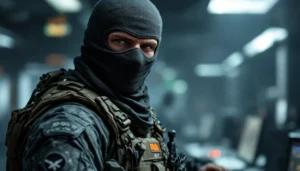
The Nintendo DS wasn’t supposed to be a serious Call of Duty platform. When Treyarch brought the franchise to Nintendo’s dual-screen handheld in 2008, skeptics doubted whether the portable hardware could handle a genuine CoD experience. Yet Call of Duty: World at War DS defied expectations, delivering a surprisingly robust military shooter that proved handheld gaming could punch above its weight. Nearly two decades later, this title has become something of a collector’s gem, a fascinating artifact of how developers adapted AAA experiences for limited hardware. Whether you’re hunting down a physical copy, emulating it, or just curious about how the DS version stacked up against its console counterparts, this guide covers everything you need to know about Call of Duty: World at War on Nintendo’s beloved handheld.
Table of Contents
ToggleKey Takeaways
- Call of Duty: World at War DS is a technical achievement that delivered a full-featured military FPS on severely limited handheld hardware, including campaign missions, Wi-Fi multiplayer for up to four players, and a progression system.
- The DS version uses stylus-based aiming and a unique dual-screen layout optimized for portable gaming, creating deliberate combat that differs from console versions but remains engaging for handheld play.
- Campaign mode spans 10-15 main missions across World War II theaters with four difficulty levels, with Veteran difficulty providing genuine challenge through increased enemy AI and reduced player health.
- Multiplayer supports Team Deathmatch, Free-for-All, Search and Destroy, and Domination modes with custom maps designed for four-player competition, though online play is now impossible without emulation since Nintendo’s Wi-Fi Connection shutdown in 2014.
- Used cartridges typically cost $30-60, with complete-in-box versions commanding $80-150, while emulation on PC or smartphones provides modern accessibility for this collector’s gem that represents an era when handhelds could deliver AAA gaming experiences.
- The game maintains remarkable 30 FPS performance during single-player missions and manages competitive multiplayer despite 4MB of RAM and a 67 MHz processor, earning enduring appreciation from speedrunners, collectors, and gaming historians.
What Is Call of Duty: World at War DS?
Call of Duty: World at War DS is the Nintendo DS port of the 2008 first-person shooter, bringing World War II combat to Treyarch’s handheld platform. Unlike many ports that strip features and content, the DS version maintained core campaign missions, multiplayer functionality through Wi-Fi, and a surprisingly deep progression system. It’s a technical achievement, a full-featured military FPS running on hardware with 4MB of RAM and a dual-core ARM processor clocked at 67 MHz. For context, the game shipped on a tiny cartridge in an era before digital distribution dominated handheld gaming.
The DS version released in November 2008, arriving roughly two months after the PS3, Xbox 360, and PC versions hit retail. Treyarch didn’t simply scale down the console experience: they reimagined it for the DS’s unique touch-screen and dual-screen layout. Multiplayer worked over Wi-Fi, allowing up to four players in competitive matches, a remarkable feat for a handheld shooter at the time. The game became one of the DS’s most technically impressive titles, even if it remained niche compared to casual juggernauts like Brain Training or New Super Mario Bros.
Game Overview and Historical Context
Release Date and Development
Call of Duty: World at War DS launched on November 11, 2008, exclusively on Nintendo DS. Treyarch helmed development, the same studio that created the console versions. The timeline was tight, the team had to adapt the game’s entire engine, assets, and mechanics for hardware roughly 100 times less powerful than a PS3. Even though the constraints, the game shipped with most of the single-player content intact, along with fully functional online multiplayer.
The decision to bring Call of Duty to the DS was significant. By 2008, the handheld was the best-selling gaming device globally, moving nearly 40 million units. Nintendo’s platform attracted casual and hardcore players alike, making it an ideal target for CoD’s expansion. But, the franchise’s fast-paced gunplay and complex controls presented genuine technical challenges on hardware designed primarily for stylus-driven games and turn-based experiences.
Platform Specifications and Technical Features
The Nintendo DS ran on an ARM7 processor clocked at 67 MHz with just 4MB of RAM. Those numbers sound laughable by modern standards, yet Treyarch squeezed a functioning Call of Duty game into that envelope. The game used the DS’s dual screens creatively: one screen displayed the main game view, while the other showed a minimap or alternative HUD elements depending on the context.
Graphics were heavily simplified compared to console versions. Character models used fewer polygons, textures were lower resolution, and environmental detail was minimal. Even though this, the game ran at a steady 30 FPS during single-player missions and held up reasonably well during multiplayer matches. Loading times were present but acceptable for a cartridge-based system.
Control layout relied heavily on the DS stylus for aiming and the D-pad for movement, a setup that felt awkward to players trained on dual analog sticks but became second nature with practice. The touch screen made aiming more intuitive than button-based alternatives, though precision suffers when compared to console experiences. Wi-Fi multiplayer was handled through Nintendo’s Wi-Fi Connection service, which shut down in 2014, making online play impossible on original hardware without homebrew solutions or emulation.
Campaign Mode: Story and Missions
Single-Player Campaign Structure
The single-player campaign mirrors the console version’s structure, spanning multiple mission sets across different theaters of World War II. Players experience the war from both American and Soviet perspectives, delivering varied gameplay environments from the Pacific to Eastern Europe. The DS version compresses missions into shorter segments optimized for handheld play sessions, with checkpoints that respect the portable format.
Campaign progression unfolds across roughly 10-15 main missions, each lasting 15-30 minutes depending on difficulty and playstyle. The game features four difficulty settings: Easy, Normal, Hardened, and Veteran. Veteran difficulty ramps up enemy AI and reduces health significantly, creating genuine challenge even for experienced players. This is not a watered-down handheld title, Veteran mode demands precision and tactical positioning.
The campaign supports solo play exclusively: no co-op is available. But, the experience scales reasonably well across difficulties, with Hardened serving as a sweet spot for most players seeking engaging but not frustrating gameplay.
Key Story Missions and Objectives
Early missions establish core mechanics through training and introductory combat. The Makin Island raid kicks off the American campaign with relatively straightforward objectives: clear areas, eliminate targets, and progress linearly through war-torn environments. These opening missions teach controls and establish the game’s pacing.
Mission variety expands throughout the campaign. Naval assault sequences require water-based gameplay mechanics. Fortified positions demand tactical cover usage. Stealth sections, though limited, reward careful positioning and patient progression. The Soviet campaign introduces different weapons, aesthetics, and mission contexts, keeping single-player from feeling repetitive.
Boss encounters exist in the form of heavily armored enemy officers and scripted setpiece moments. These don’t function as literal “boss fights” but rather as challenging encounters requiring specific strategies, flanking routes, weapon switching, or explosive placement. The narrative ties these encounters to historical WWII events, maintaining thematic coherence throughout the campaign.
Mission objectives remain straightforward and clear. The game doesn’t obscure goals with vague waypoints: it explicitly tells players what to accomplish. This clarity respects the portable format, allowing players to jump in, understand what’s needed, and make progress in short sessions.
Multiplayer Features and Online Gameplay
Online Multiplayer Modes
Multiplayer represents the most impressive technical achievement in Call of Duty: World at War DS. The game launched with full Wi-Fi support, enabling up to four players in competitive matches, revolutionary for a handheld shooter in 2008. But, that four-player limit versus eight or more on console clearly illustrates the hardware compromises.
Supported modes include Team Deathmatch, Free-for-All, Search and Destroy, and Domination. Each mode functions identically to console versions but accommodates the smaller player count. Maps are custom-designed for the four-player experience, ensuring matches don’t feel artificially cramped even though the reduced scale.
Matches run locally through download play or via Wi-Fi Connection. The Wi-Fi option allowed cross-console play in theory, though the player base died within years. Finding matches became nearly impossible by 2012, and Nintendo’s Wi-Fi Connection shutdown in 2014 made online multiplayer permanently unavailable on original hardware.
Ranked progression exists: players earn experience points (XP) that unlock weapons, perks, and cosmetics. This progression system encouraged grinding and kept engaged players motivated. Rankings tracked wins, K/D ratio, and other stats across online profiles.
Weapons, Loadouts, and Progression System
The weapon arsenal pulls from WWII-era firearms: M1 Garand, Tommy Gun, Kar98k, MP40, and dozens of others. Secondary weapons include pistols and grenades. All weapons feel appropriately weighted and handle differently, providing meaningful choice during loadout creation.
Perks function identically to console versions. Sleight of Hand reduces reload time. Steady Aim improves hipfire accuracy. Martyrdom drops live grenades upon death. Players select three perks per loadout, one from each tier, creating thousands of loadout combinations. The meta shifts subtly as the community discovers optimal builds, but most loadouts remain viable.
Weapons unlock through leveling. Early levels provide access to basic rifles and SMGs. Higher levels unlock specialized weapons like sniper rifles, shotguns, and light machine guns. This progression respects casual players while rewarding dedication: someone jumping in fresh won’t immediately face oppressive matchups against fully-unlocked opponents, though the advantage clearly exists.
Grenades and special equipment round out loadouts. Frag grenades function as reliable area-denial tools. Smoke grenades enable tactical retreats. C4 delivers explosive versatility. Equipment choices significantly impact playstyle, a grenade-focused loadout plays entirely differently from one built around precision aiming.
Balancing was present but imperfect. Certain weapons outperformed others at their intended ranges, but the design avoided hard counters. A skilled player using a theoretically “weaker” weapon could overcome players with “stronger” choices through superior positioning and aim. This encouraged diverse playstyles rather than forcing conformity to a narrow meta.
Tips and Strategies for Success
Campaign Strategies and Difficulty Tips
Veteran difficulty demands respect. The campaign becomes substantially harder, enemies absorb more punishment and deal increased damage. Approach Veteran as a puzzle-solving exercise rather than a run-and-gun rampage. Cover becomes mandatory, not optional. Position yourself behind solid objects before engaging enemies, and don’t expose yourself to multiple enemy angles simultaneously.
Grenade management is critical. Veteran enemies throw grenades more aggressively and accurately. Listen for the distinctive beeping sound and immediately relocate. Staying stationary makes you a predictable target: constant micro-movements within cover frustrate enemy aim.
Weapon selection evolves throughout missions. Early missions favor reliable rifles like the M1 Garand or Mosin-Nagant, these weapons provide accuracy and stopping power without requiring excessive ammunition. As you progress and face armored enemies, switch to higher-caliber weapons or explosives. Sniper rifles handle distant threats effectively, allowing you to pick off isolated targets before they call for backup.
Ammo conservation matters, especially on higher difficulties. Burst-fire your weapon rather than full-auto when possible. This improves accuracy, reduces recoil, and preserves ammunition for emergencies. The campaign supplies ammo generously at resupply stations, but resource management prevents embarrassing moments where you’re forced to melee an armed opponent because you’re out of rounds.
Melee combat works as a last resort. Use it to finish weakened enemies or silent-kill unaware targets. Never engage healthy enemies in melee: they’ll overwhelm you. Explosives (grenades, C4, satchel charges) bypass this restriction entirely, use them when you’re overwhelmed.
Competitive Multiplayer Tactics
Multiplayer success depends on map knowledge and positioning. With only four players per match, every kill matters disproportionately. Dying in a four-player match is far more consequential than in an eight-player game because the team loses 25% of its firepower immediately.
Map control determines outcomes. Identify high-value positions, elevated locations, choke points, and areas with multiple escape routes. Control these spaces with your team, forcing opponents into unfavorable engagements. Most maps feature natural “hot zones” where players congregate: either dominate these areas or avoid them entirely depending on your loadout and teammates.
Weapon range dictates positioning. Sniper rifles thrive on maps with long sightlines and limited cover: claim vantage points overlooking crucial pathways. Shotguns demand close-quarters encounters: stick to tight corridors and indoor spaces. SMGs balance range and mobility: they excel in mid-range skirmishes within populated areas. Understanding your weapon’s strengths and positioning accordingly amplifies effectiveness.
Team communication, though limited without voice chat, matters enormously. Call out enemy positions, warn teammates of threats, and coordinate flank routes. Even without built-in voice, pinging minimap locations and using the chat wheel (if available) coordinates basic tactics.
Perk synergy enhances performance. Pair Steady Aim with a shotgun or SMG for aggressive playstyles. Combine Sleight of Hand with high-ROF weapons that burn through ammunition. Use Ghosted (remains hidden from enemy radar) with sniper rifles to maintain surprise positioning. Thoughtful perk selection multiplies weapon effectiveness.
Spawning mechanics matter. When respawning, immediately move from spawn zones, enemies anticipate spawns and camp nearby. Change positioning patterns: predictable spawning behavior makes you an easy target. Spawning near teammates provides safety and enables quick team reformation after deaths.
Round management in Search and Destroy demands different thinking. Each death is permanent that round: positioning becomes even more critical. Play slower, gather information before committing to fights, and let your team’s superior positioning create numerical advantages in skirmishes.
Comparing Call of Duty: World at War DS to Console Versions
Gameplay Differences and Adaptations
The fundamental gameplay loop remains intact between DS and console versions, move, aim, shoot, but the execution differs significantly. Console versions deliver snappy, responsive aiming through dual analog sticks. The DS stylus-based aiming feels more deliberate and requires different muscle memory. Transitioning between versions requires adjustment: aim sensitivity feels inverted in a weird way that takes sessions to master.
Controls shape how combat unfolds. Console aiming allows rapid target-switching and reactive gameplay. DS aiming is slower but potentially more precise for dedicated players. This makes the DS version slightly less twitchy: players who excel in fast-paced multiplayer might struggle initially on the handheld. The pace of play becomes methodical rather than frenetic.
Map design adapted for four-player multiplayer rather than console’s eight-player matches. DS maps are smaller, more compact, and feature tighter choke points. This compressed scale creates different strategic dynamics, flanking routes matter more, spacing between players tightens, and single engagements impact matches more dramatically.
Vehicle sequences exist in console campaign missions but are absent or significantly simplified in the DS version. This actually benefits the game, vehicle controls would be nightmare-inducing with stylus aiming. Instead, DS replaces vehicle sections with on-foot alternatives that maintain pacing and variety.
Weapon balance differs subtly. The DS version received adjustments to account for the different aiming methodology and the four-player maximum. Certain weapons that dominated console multiplayer received tuning passes, ensuring no single weapon felt oppressive on handheld hardware.
Graphics and Performance on Nintendo DS
Graphically, the DS version is unambiguously less detailed than console counterparts. Character models use fewer polygons, enemy diversity is reduced, and environmental textures lack the resolution and artistry of PS3/Xbox 360 versions. But, claiming the game looks “bad” misses context. For a 2008 handheld title, the graphics are impressive, draw distances are decent, frame rates hold relatively steady, and the art direction maintains the WWII aesthetic recognizably.
The dual-screen layout creates unique visual opportunities. The bottom screen handles HUD elements, minimap, and weapon information while the top screen displays the main game view. This clever use of real estate avoids cluttering the gameplay view, which might improve focus compared to overlay-heavy console versions.
Performance remains the most impressive technical accomplishment. Maintaining 30 FPS during single-player missions on a 67 MHz processor with 4MB RAM is genuinely remarkable. Multiplayer occasionally dips during intense four-player firefights with abundant visual effects, but the drop-offs are brief and rare. For a handheld game, stability is exceptional.
Loading times exist but aren’t excessive. Mission loads take 15-20 seconds: multiplayer lobbies load within similar timeframes. This was acceptable for 2008 handhelds but feels interminable by modern standards. The cartridge format imposes inherent limitations that weren’t addressed until digital distribution became standard.
Artistic direction shines even though technical limitations. WWII environments feel authentic, Pacific islands are distinct from European theaters, indoor bunkers feel claustrophobic, and outdoor battles capture the scale of historical combat. The art team compensated for lower polygon counts through smart color palettes and careful level design that makes limited environments feel larger.
Call of Duty on DS achieved what seemed impossible: a technically competent, feature-rich FPS on hardware that seemingly couldn’t handle the genre. That it’s playable, stable, and enjoyable remains impressive even alongside Call of Duty Military that dominates modern platforms.
Legacy and Collector’s Value Today
Availability and How to Play in 2026
In 2026, Call of Duty: World at War DS occupies an odd market position. It’s no longer manufactured, production ceased over a decade ago, making original cartridges increasingly scarce. But, it’s not prohibitively expensive. Used copies typically sell for $30-60 depending on condition and whether original packaging is included. Complete-in-box versions command premium prices ($80-150), appealing to collectors seeking pristine examples.
Physical cartridges remain fully playable on any Nintendo DS, DS Lite, or DSi model. The game requires no special hardware or modifications. If you own a DS and can source a cartridge, you can play immediately. This accessibility distinguishes the game from titles requiring emulation or digital workarounds.
Emulation provides another avenue for 2026 players. The DS emulation scene has matured significantly: emulators like Melonds and DeSmuME run Call of Duty: World at War DS reliably with accurate visual rendering and stable frame rates. ROM files are readily available through standard emulation channels. This method allows play on PC, Mac, or even smartphones, though purists argue emulation lacks the authentic handheld experience.
Online multiplayer remains impossible without emulation or private servers. Nintendo’s Wi-Fi Connection shutdown in 2014 permanently disconnected original hardware from online play. But, enthusiasts have created private servers that emulated the original Wi-Fi system. Connecting to these custom servers requires emulation plus additional technical setup, making it inaccessible for casual players but feasible for dedicated fans.
Modern Nintendo DS hardware itself faces availability challenges. Original DS models command $50-100 for working units, and stock dwindles. DS Lite units are somewhat more available ($60-120), while DSi models frequently hit $80-150. Investing in both hardware and cartridge costs $100-200 for a complete original experience, making retro entry somewhat pricey compared to emulation.
Video game libraries like GameSpot occasionally feature retrospectives on older handheld titles, helping collectors understand market values and condition standards. These resources guide purchasing decisions for those seeking authentic copies.
Community and Nostalgia Factor
Call of Duty: World at War DS occupies a unique place in gaming nostalgia. It represents an era when handheld gaming could deliver AAA experiences, a proposition that feels increasingly impossible in the mobile-dominated 2020s. Nintendo DS enthusiasts maintain active communities across forums and subreddits dedicated to the platform. These communities share gameplay videos, discuss optimal strategies, and swap cartridges.
The game itself generates remarkably positive retrospectives. Critics and players alike acknowledge that Treyarch delivered an ambitious, fully-featured game on genuinely constrained hardware. This earned respect translates into collector interest: people seek the game not out of obligation but genuine appreciation for the achievement it represents.
Nostalgia anchors much of the game’s continued relevance. Players who owned a DS in 2008 recall portable FPS experiences with genuine affection. Returning to the game invokes memories of playing on buses, planes, or during school breaks, experiences tied to the handheld’s unique place in portable gaming history. This emotional attachment sustains interest decades after release.
Streaming communities occasionally revisit World at War DS, attracting views from both nostalgic veterans and curious newcomers. YouTube retrospectives featuring gameplay footage introduce younger audiences to the title, perpetuating awareness. The game’s technical impressiveness, how competent an FPS feels on that hardware, generates discussion and recommendation cycles.
Collector communities actively trade and discuss DS cartridges, including Call of Duty: World at War. Speedrunners occasionally tackle the campaign, pushing the game’s limits through optimized routes and glitch exploitation. These active subcultures ensure the game remains discussed in forums and communities, preventing it from fading into complete obscurity.
The game represents a specific moment in handheld gaming history that won’t recur. Modern handhelds like the Steam Deck deliver console-quality experiences, but they lack the cultural impact and limitations that made World at War DS significant. Future gamers will appreciate the title as a historical artifact, evidence that ambitious developers could create compelling experiences within severe hardware constraints. That legacy ensures enduring interest among collectors and gaming historians.
Competitive multiplayer, while dead online, persists through local wireless play. Enthusiasts organize events where multiple DS units connect for four-player matches, reviving the original multiplayer experience. These gatherings are niche but passionate, demonstrating that the game still entertains even though decades passing since launch. Resources like Shacknews occasionally cover retro gaming events, bringing attention to these grassroots communities.
The broader Call of Duty franchise has evolved dramatically since 2008, but World at War DS remains a curiosity worth examining. For players seeking perspective on how the franchise adapted to different platforms, or collectors chasing portable gaming history, the DS version offers genuine value. It’s not the best way to experience Call of Duty, but it’s arguably the most impressive, a technical achievement that justifies its place in gaming history and its continued desirability among enthusiasts.
Players interested in other classic Call of Duty experiences on alternative platforms should explore resources documenting the franchise’s broader history. The Call of Duty Archives provides comprehensive coverage of the series across generations. Alternatively, those curious about the franchise’s evolution might examine Call of Duty Black Ops titles, which represent how the series progressed beyond the original World War II setting.
Conclusion
Call of Duty: World at War DS represents a singular moment in gaming history, when ambitious studios committed resources to delivering AAA experiences on severely constrained handheld hardware. The game isn’t the definitive way to play Call of Duty, nor does it match console versions feature-for-feature. Instead, it’s a technical achievement that deserves appreciation for what Treyarch accomplished within serious limitations.
The campaign delivers recognizable missions, the multiplayer functions with surprising robustness, and the presentation maintains the franchise’s identity even though graphical compromises. For 2026, the game remains playable either through original hardware or emulation, preserving access for curious players and dedicated collectors.
Whether you’re hunting physical cartridges, revisiting a childhood favorite, or exploring gaming history, World at War DS offers context into how the industry handled handheld gaming before mobile devices transformed the landscape. It’s a relic, certainly, but a functional one, a reminder that constraints breed creativity and that sometimes the most impressive achievements aren’t the flashiest, but the ones that refuse to compromise their core vision even though tremendous pressure to do so.