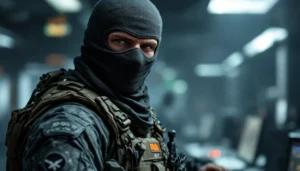
Ghost is one of Call of Duty’s most iconic operators, and in Warzone, he’s become a staple pick for players who want to dominate through stealth and tactical precision. Whether you’re familiar with Simon Riley from the campaign or you’re just jumping into the tactical shooter for the first time, understanding how to leverage Ghost’s kit effectively can be the difference between winning engagements and getting pinned down. In 2026, the meta has shifted, and Ghost has evolved with the game, his invisibility mechanics, loadout synergies, and ability to control space make him a formidable choice for both casual and competitive players. This guide breaks down everything you need to know about Ghost in Warzone: who he is, how to kit him out, strategies that actually work, and the cosmetics that let you stand out while staying invisible when it matters.
Table of Contents
ToggleKey Takeaways
- Ghost in Warzone excels as a stealth operator who stays off enemy radar through UAVs and Heartbeat Sensors, enabling aggressive flanks and unexpected positioning that catches teams off-guard.
- The best Ghost loadout pairs mid-to-close-range weapons like the XM4 or GPMG-7 with the Ghost perk, Fast Hands, and tactical grenades like Flash Bangs to maximize ambush effectiveness.
- Ghost’s true strength lies in team coordination and communication—use voice callouts, pinging, and bait rotations since teammates cannot track your radar presence, making you a force multiplier in squad play.
- Avoid relying solely on radar immunity; maintain audio discipline by walking into positions and sprinting during rotations, since enemies can still hear and see you despite not detecting you on radar.
- Ghost ranks neither overpowered nor obsolete in 2026, making him situation-dependent for competitive players who understand map rotations, circle positioning, and when to flank versus hold defensive positions.
Who Is Ghost in Warzone?
Ghost, whose real name is Simon Riley, represents the shadow operative archetype in Call of Duty’s universe. He’s not just a cosmetic choice, his ability kit is designed around staying off the radar and punishing players who rely on traditional detection methods. In Warzone, Ghost functions as an Operator with access to specific perks and field upgrades that synergize with a stealth-heavy playstyle.
Simon Riley’s role in Call of Duty Ghost Warzone makes him particularly strong in mid-to-late rotations when the map shrinks and positioning becomes critical. His perks naturally counter some of the most meta detection tools in the game. Players who pick Ghost are signaling they understand how to use the minimap to their advantage and aren’t afraid to play around reconnaissance tools like UAVs and Heartbeat Sensors.
In the 2026 season, Ghost remains viable across all game modes, multiplayer, battle royale, and DMZ. But, his value proposition has shifted slightly with recent balance patches. He’s less of a “must-pick” and more of a “situation-dependent choice,” which means skilled players can leverage him in ways casual players overlook. Understanding his strengths and when to deploy them is what separates effective Ghost players from those just picking him for the aesthetic.
Ghost’s Loadout and Equipment Recommendations
Building the right loadout for Ghost means understanding what his passives give you and filling gaps with complementary weaponry and gear. Your loadout is the foundation of your effectiveness, and there’s no one-size-fits-all setup, it depends on your playstyle, the game mode, and the current meta.
Best Weapons for Ghost
Ghost pairs exceptionally well with mid-range to close-quarters weapons because his stealth playstyle favors ambush scenarios. Here are the current meta picks:
- Modern Warfare III Assault Rifles: The XM4 continues to dominate in 2026. It offers low recoil, fast TTK (time-to-kill), and works at multiple ranges. Pair it with a tactical laser and VLK 3.0x scope for versatility.
- SMGs for Close Quarters: The GPMG-7 has seen buffs and pairs well with Ghost’s aggressive stealth tactics. Use a Merc foregrip and 40-round mag for sustained fire in tight spaces.
- Sniper Setup: For Ghost players who want to leverage invisibility into one-shot kills, the LW3A1 Frostline with a thermal scope is nasty. You’re invisible to killstreaks: they never see the shot coming.
- Tactical Rifle Option: The XM109 remains a solid mid-range option if you want to stay mobile while dealing chunky damage.
Your secondary weapon matters less with Ghost since you should rarely end up in situations where you need to swap. A lightweight pistol for emergency ammo conservation is fine.
Perks and Field Upgrades
Ghost’s perk package is where his kit shines. The combination of staying off UAVs and Heartbeat Sensors is powerful in an intelligence-heavy meta:
- Vest Perk: Ghost (yes, the perk shares his name). You stay off enemy radars while moving and when stationary, essential for the character. This is why Ghost operators are so hard to locate.
- Tactical Perk: Fast Hands for faster equipment deployment, or Sleight of Hand if you’re running an ammo-hungry weapon. Fast Hands synergizes better with Ghost’s aggressive repositioning.
- Lethal Perk: Dexterity isn’t flashy, but it speeds up weapon swaps and climbing, which matters in rotations. Alternatively, Quick Fix gives you health regen on kills, useful for Ghost players who engage frequently.
For field upgrades, Portable Radar is clutch if you’re running solo: it gives you visibility while keeping you ghosted. In teams, Prox Alarm lets you set up defensive positions and know when enemies are creeping close. Some players prefer Decoy Grenades for misdirection, especially in competitive 1v1s.
Tactical Gear and Lethal Equipment
Your throwables matter more than people think. They can turn engagements and create escape routes:
- Tactical: Flash Bangs are the gold standard for Ghost. You’re about to push someone in a building? Flash them, and they can’t see the invisible operator closing in. Smoke Grenades work too, especially if you’re being chased and need to break line of sight quickly.
- Lethal: C4 is incredible with Ghost because you can place it defensively and rely on them not seeing you approach. Frag Grenades are more universally useful but less synergistic. Semtex splits the difference.
Many competitive Ghost players forgo lethal equipment in favor of two tactical items, using them for utility rather than damage. That’s a valid choice if you’re comfortable with gun skill.
Strategies for Playing as Ghost
Ghost’s effectiveness hinges on how you use his invisibility to the radar. It’s not an invisibility cloak, enemies can still see and kill you if they have visual. What you get is freedom from most detection tools, which changes how you should approach rotations, engagements, and positioning.
Aggressive Stealth Tactics
Many players misunderstand Ghost as a “passive” operator. In reality, he enables aggressive plays that would get you killed if your position was known:
- Off-the-Radar Rushes: Because you’re not on UAVs or Heartbeat Sensors, you can rotate through expected lanes and surprise enemies holding those routes. This is especially effective in final circles where rotations are predictable. Push where enemies expect a pinched third-party from a different direction, they won’t hear it coming because they’re not scanning for you on radar.
- Building Control: Hold second or third floors of buildings without fear of being pinged by a Heartbeat Sensor. Set up crossfires with teammates while staying invisible to reconnaissance. This transforms multi-story buildings into advantageous positions instead of liabilities.
- Bait and Switch: Use your teammate as bait while you flank. Since you’re not on their radar, they focus fire on the obvious threat while you’re already repositioning. This works particularly well in competitive 2v2s and squad play.
- Third-Party Aggression: In squad modes, Ghost thrives at crashing fights. Position yourself off-radar, wait for two teams to weaken each other, then strike from an unexpected angle.
The key mindset: Use Ghost to appear where enemies don’t expect you to be.
Defensive Positioning and Map Control
While Ghost excels at aggressive plays, he’s equally powerful defensively:
- Hardpoint Defense: In modes with objective-based gameplay, Ghost can control a zone without constant pressure from detection. Plant C4 around the area, sit in a corner, and wait for the inevitable push. They can’t ping you, which means they push blind.
- Circle Rotations: When the circle is closing and you’re stuck in the edge, Ghost’s radar immunity is invaluable. You can hold the edge safely because enemies pushing into the circle can’t sweep with Heartbeat Sensors. This is where Ghost shines in late-game scenarios.
- Sound Cues: Since enemies rely on sound and visual when they can’t use radar, movement discipline is critical. Walk when holding a position, sprint only during rotations. Contrast this with aggressive stealth where you’re making noise intentionally as part of your gameplan.
Team Coordination and Communication
Ghost is a team operator. Here’s how to leverage him in squad play:
- Callouts Over Radar: Your teammates can’t rely on you showing on radar to track your position. Use voice communication to relay your location, especially during intense moments. “I’m pushing left building, two enemies spotted” beats silence.
- Pinging and Markers: Use in-game ping systems extensively. Mark enemy positions, loot, and rotations so your team understands your play without seeing you on the minimap.
- Bait Rotations: Coordinate fake rotations where your teammates move one direction while you flank a different route. Enemies spot your team, focus on them, and get caught off-guard by your off-radar approach.
- Support Play: In competitive formats, Ghost excels in support roles. You’re the one who cleans up weakened enemies, grabs revives, or holds flanks while teammates push objectives. Your invisibility to detection makes you the perfect cleanup crew.
The best Ghost players aren’t lone wolves, they’re force multipliers who create chaos for their team.
Advanced Tips for Competitive Warzone Players
If you’re pushing into competitive Warzone, Ghost becomes even more valuable because the meta revolves around information and rotations. Here’s where the skill expression separates casual from elite players.
Maximizing Ghost’s Invisibility
Invisibility to radar isn’t just a passive, it’s an active tool you can weaponize:
- Third-Party Timing: In competitive squad modes, watch two teams fight. Your team engages the visible team while you stay off their radar, rotating wide. When their focus splits between two directions, that’s when you peak. Teams that don’t expect off-radar flanks get caught in crossfire they can’t predict. According to pro player settings, competitive Ghost players often adjust their sensitivity slightly lower to land precision shots when flanking, since they’re already confident in positioning.
- Altitude Advantage: Use vertical positioning combined with radar invisibility. Camp a rooftop, stay prone, and enemies searching for you at ground level waste time. When they rotate, push while they’re distracted. Vertical spacing plus radar avoidance is a brutal combo.
- Sound Discipline Awareness: Aggressive players expect noise. Counter that by moving quietly when holding a position, then sprinting aggressively when rotating. This confuses audio cues. Enemies hear footsteps from one direction but you’re actually elsewhere.
- Loadout Flexibility: Swap between aggressive (SMG + Flash Bangs) and defensive (Sniper + Smoke) loadouts depending on circle position and team needs. Ghost’s flexibility means you’re never hard-countered by the meta.
Counter-Strategies Against Ghost Users
Not every team will have a Ghost, but when they do, you need a response:
- Camera-Based Detection: Since Ghost avoids radar, use your own eyes and audio cues. Play sound through good headphones, footsteps betray even invisible operators. Thermal scopes penetrate smoke and reveal heat signatures.
- Coverage Utility: Operators with area-denial tools (like Sensor Mines) create zones Ghost players must avoid or reveal themselves entering. Stack these in rotations they must use.
- Coordination and Numbers: Ghost falters when he’s outnumbered and can’t flank effectively. Groups that stay together and trade shots force Ghost users to either engage unfavorably or rotate away.
- Predictive Positioning: Study how Ghost players move. They often rotate through predictable paths to set up flanks. Pre-aim these routes. You won’t see him on radar, but you can predict where he’s going based on game flow.
For loadout recommendations and detailed guides on how professional players counter stealth operators, The Loadout provides in-depth breakdowns of current meta shifts and tactical counters. Understanding what the competitive community is running helps you prepare responses.
Ghost Skins and Cosmetics
Ghost’s cosmetic line has expanded significantly, and while cosmetics are purely aesthetic, some skins have practical value. Not all Ghost skins are created equal when it comes to visibility on maps.
The Classic Ghost Skin remains the most iconic, the skull balaclava and dark tactical gear. It’s instantly recognizable and offers no gameplay advantage, but it’s what most players expect when they see a Ghost operator. Ghost Commando and Ghost Roze variants are popular, though Roze’s darker silhouette is marginally harder to spot in shadows at distance.
Seasonal Ghost Skins rotate regularly. The 2026 iterations include sci-fi inspired designs and utility-focused tactical gear. Some cosmetics like Ghost Operator lean heavily into the military aesthetic, while others (Anime crossovers, for example) prioritize flashiness over subtlety.
Honestly? Pick the skin that makes you feel good. The gameplay impact is minimal once you’re experienced. That said, if you’re serious about competitive play, avoid the brightest, most reflective skins. A dark Ghost skin won’t save you from a good player, but it removes one variable. Focus on gameplay over cosmetics, your positioning and decision-making matter infinitely more than whether your Ghost skin is from the 2024 or 2026 battlepass.
If you’re hunting for loadout inspiration and customization tips beyond cosmetics, PC Gamer’s reviews often cover how different Ghost variants perform across various map lighting conditions, though eventually, your gun skill and map knowledge will determine success far more than aesthetics.
Common Mistakes to Avoid When Playing Ghost
Even solid players make mistakes with Ghost. Here’s what separates competent Ghost users from exceptional ones:
Relying Too Heavily on Radar Immunity: Ghost’s biggest trap is assuming invisibility to radar means invincibility. You’re still visible, tactile, audible, vulnerable to killstreaks that use different detection (Counter-UAV, Chopper Gunner). Play as if everyone can see you, just with the advantage that they need to scan differently.
Poor Audio Discipline: Running around like you’re untouchable gets you killed. You’re invisible to radar, not to ears. Campers listening for footsteps will hear you coming from a mile away. Walk into holding positions, sprint during rotations when noise masks you.
Ignoring Your Team: Ghost works because you create chaos. If you’re not communicating flanks, repositioning, or coordinating bait, you’re just a regular operator without radar presence. Stay vocal. Your invisibility only matters if your team exploits it.
Overcommitting to Flanks: The temptation to always play off-radar and aggressive gets players killed when they push too deep. Flank effectively, but know your exit route. Ghost’s strength is repositioning, use it to disengage, not just engage.
Neglecting Audio and Visual Scanning: Because you’re not on radar, you might assume you’re not being hunted. Wrong. Watch killcams. If enemies are pre-aiming where you flank, change it up. Adapt faster than they expect.
Weapon Mismatches: Pairing Ghost with long-range sniper setups in close-quarters Warzone maps negates his strengths. Ghost shines with mid-range to close-quarters loadouts where his flanking ability creates advantage. Match your weapon to the map and playstyle.
Playing Solo Unnecessarily: Ghost in solos is fine, but in squads, he reaches his potential. If you’re consistently losing 1v3s, it’s because Ghost doesn’t provide the raw defense of other operators in those scenarios. Know the mode and adjust.
Conclusion
Ghost in Warzone represents the intersection of tactical positioning, radar advantage, and aggressive stealth play. Whether you’re Simon Riley in the campaign or just a player choosing an operator, his kit rewards smart positioning and team coordination over raw gunplay. In 2026, he’s neither overpowered nor obsolete, he’s a choice that separates thinking players from reactive ones.
Mastering Ghost means understanding when to flank, when to hold, how to communicate with teammates even though being off-radar, and why your loadout synergies matter. It means adapting your playstyle based on the circle, your team composition, and enemy tendencies. Most importantly, it means recognizing that invisibility to detection tools is a tool, not a safety net.
Start with the foundational loadout recommendations, practice your rotations on maps you know well, and pay attention to where you’re getting caught. Record your deaths and ask why you died, was it poor audio discipline, a predictable flank, or a mismatch between your loadout and the situation? Those answers will accelerate your improvement faster than any guide.
Ghost remains viable at every skill level, from casual to esports. The ceiling for this operator is genuinely high, which is why you see him consistently in competitive tournaments. Pick him up, respect the mechanics, and let your positioning speak louder than your radar presence.