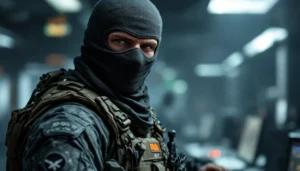
Ghost is arguably the most iconic character in the Call of Duty franchise, a masked SAS operator whose enigmatic presence has captivated players for over a decade. From his haunting introduction in Modern Warfare 2 to his central role in the 2022 reboot, Ghost represents everything players love about elite tactical operators: mystery, precision, and uncompromising excellence. Whether you’ve watched him lead Task Force 141 through impossible missions or deployed him as a multiplayer operator, understanding who Ghost is means understanding one of gaming‘s most compelling military fiction characters. This guide breaks down his background, evolution, relationships, and why he’s become a cultural fixture in both campaign lore and competitive play.
Table of Contents
ToggleKey Takeaways
- Ghost, Lieutenant Simon Riley, is the most iconic Call of Duty operator, defined by his skull mask, tactical excellence, and mysterious demeanor across campaign and multiplayer experiences.
- Ghost’s character arc spans from his tragic death in Modern Warfare 2 (2009) to his complex reinvention in the 2022 reboot, showcasing his evolution from supporting character to a fully realized protagonist with psychological depth.
- His leadership style emphasizes precision, patience, and leading by example rather than charisma, making him invaluable in infiltration and surgical strike operations where minimal collateral damage is required.
- Ghost maintains deep bonds of trust with Captain Price and Soap MacTavish in Task Force 141, grounded in shared survival, demonstrated competence, and willingness to execute difficult decisions in gray moral territory.
- The 2022 Modern Warfare 2 modernized Ghost’s visual identity and gameplay presence while preserving his iconic aesthetic, keeping him relevant across console, PC, and mobile platforms as a cultural touchstone in gaming.
Ghost’s Background And Origins
Early Military Career
Ghost, Lieutenant Simon Riley, didn’t emerge from nowhere. Before becoming an SAS legend, he was a seasoned soldier with the British Special Forces, refined through years of combat operations in hostile territories. His early career shaped the relentless operator fans know today: someone who learned to operate in shadows, execute surgical strikes, and survive situations that would break most soldiers. Riley’s background emphasizes discipline, tactical thinking, and an almost supernatural ability to read situations and anticipate threats.
The specifics of his pre-Task Force 141 deployments aren’t heavily documented in campaign narratives, but they laid the groundwork for his reputation as a ghost in the literal sense, an operative who could disappear into urban environments, deserts, or jungles and strike without warning. This expertise became his defining characteristic: the ability to operate independently, make split-second decisions under impossible pressure, and come out alive when the odds were stacked against him.
The Formation Of Task Force 141
Task Force 141 didn’t exist until the events leading up to Modern Warfare 2. Captain John Price assembled an elite multinational task force specifically to counter the rising threat of Makarov and his forces, and Ghost was a natural choice for this roster. As a Lieutenant, Ghost brought years of SAS experience and an uncanny tactical mind that complemented Price’s leadership. The formation of Task Force 141 marked Ghost’s transition from an excellent soldier into something more: a key player in what would become one of the most celebrated fictional military units in gaming.
The chemistry between Ghost and the other operators, especially with Soap MacTavish and the rest of the squad, defined the franchise‘s storytelling. Ghost’s role wasn’t just to execute orders: he became Price’s right hand, someone trusted with critical intel, dangerous insertions, and moments where the mission hinged on pure operational excellence. This foundation would carry Ghost through multiple campaigns and make him central to everything Call of Duty became.
Ghost’s Role In Modern Warfare 2
The Makarov Campaign
Ghost’s defining moment came in Modern Warfare 2 (2009), where he served as both a crucial campaign character and a constant presence in Soap MacTavish’s journey. The campaign’s central conflict, tracking down Vladimir Makarov and his terrorist network, relied heavily on Ghost’s tactical expertise and unflinching demeanor under fire. He participated in some of the game’s most memorable missions, from assault operations to high-stakes infiltration scenarios where a single mistake meant mission failure and likely death.
What made Ghost’s role particularly compelling was his restraint. While other operators showed emotion or personality, Ghost remained cold, controlled, and focused purely on the objective. He delivered orders, executed plans, and carried out the dirtiest work without hesitation. This characterization made him feel dangerous in a way that transcended typical military fiction, here was an operator who’d crossed lines that most soldiers wouldn’t dare approach, and he’d done it for Queen and Country.
The Makarov arc built Ghost’s legend slowly but deliberately. Players saw him breaching buildings, fast-roping from helicopters, and making impossible shots in the chaos of modern combat. Each mission reinforced the same message: this operator was elite, reliable, and somehow always three steps ahead of the enemy.
Ghost’s Controversial Death
Then came the ending that shocked the gaming world. In the final act of Modern Warfare 2, Ghost and Roach are ambushed during an exfil after recovering critical intel from a downed airfield. Shot, doused in gasoline, and set ablaze, Ghost dies in one of gaming’s most haunting sequences, a moment that subverted every expectation players had about a character who seemed invincible. The twist? Makarov orchestrated the setup, and Ghost’s death became a catalyst for the game’s explosive conclusion.
That death resonated with players because Ghost felt indispensable. He wasn’t a secondary character: he was the emotional anchor of the campaign, the operator you trusted completely, and his sudden removal from the board left a void that couldn’t be filled. For years, Ghost’s death remained final, cementing his legacy as a tragic figure who made the ultimate sacrifice. The impact of that moment sustained Ghost’s cultural relevance long after the game’s 2009 release date, with players debating the circumstances, the unfairness of his end, and what it meant for the franchise’s direction.
Ghost’s Return In Modern Warfare 2 (2022 Reboot)
The New Timeline And Character Reinvention
When Infinity Ward rebooted Modern Warfare in 2019 and continued the story with Modern Warfare 2 in 2022, Ghost’s return wasn’t a resurrection, it was a reimagining. In this new timeline, Ghost (still Simon Riley) is a hardened SAS Lieutenant with a slightly different history but the same relentless drive. The reboot allowed the developers to explore Ghost’s character with modern storytelling techniques, giving him more agency and development than the original 2009 version.
This Ghost operates in a world where Makarov remains a threat, but the geopolitical landscape has shifted dramatically. Working alongside Captain Price, Soap MacTavish (now a Sergeant), Gaz, and newer operators like Roach and Aleksandra Valentina, Ghost encounters fresh challenges that test his resolve and force him to reckon with his own methods. The 2022 iteration presents a Ghost who’s older, wearier, but somehow more dangerous, a veteran operator who’s learned that wars aren’t won through glory but through grit and willingness to do what others won’t.
The character reinvention also updated Ghost’s visual identity while preserving his iconic skull mask aesthetic. The 2022 design feels grittier, more tactical, with gear that suggests years of real combat experience rather than an operator fresh from the SAS academy. This visual evolution signals that Call of Duty franchises can adapt their characters while maintaining what makes them recognizable and beloved.
Ghost’s Playable Role In The Campaign
Unlike the original Modern Warfare 2, where Ghost was primarily a supporting character, the 2022 reboot gives him substantial campaign presence. Players see ghost-perspective missions, experience his tactical approach to problem-solving, and understand his decision-making under extreme pressure. This shift from supporting character to partial protagonist deepens player connection to him and humanizes what previous games had presented as an almost mythical operator.
The campaign showcases Ghost’s evolution through several key missions that test his loyalty, his methods, and his limits. Without spoiling specifics, players witness Ghost operate independently, lead squads, and face situations where his usual cold precision isn’t enough, where human judgment and gut instinct matter as much as training. This character development transforms Ghost from an archetype into a fully realized person with a past that haunts him and a present where survival means more than just tactical execution.
The 2022 Modern Warfare 2 campaign (available on PS4, PS5, Xbox One, Xbox Series X
|
S, and PC) also integrates Ghost into larger narrative arcs that connect to the multiplayer universe, making him central to the broader story framework. His involvement in specific operations and his interactions with other operators establish him as the backbone of Task Force 141’s most critical missions.
Ghost’s Iconic Character Traits And Personality
The Skull Mask And Visual Identity
Ghost’s signature element is undeniably his skull mask, a design choice that’s become instantly recognizable across the entire gaming industry. But it’s not just aesthetic. The mask serves as both armor and legend. It obscures identity while simultaneously declaring that this operator operates by different rules, answers to a different code. The skull motif carries psychological weight: it’s intimidating, it’s memorable, and it transforms Simon Riley from a person into an idea: the embodiment of tactical perfection wrapped in mystery.
The visual design evolved significantly between the 2009 original and the 2022 reboot. The original featured a balaclava with a white skull painted on, creating an almost ghost-like appearance. The 2022 version modernized this with tactical netting, updated materials, and weathering that suggests the mask has seen real combat. Both versions accomplish the same goal: making Ghost immediately identifiable while maintaining an air of inscrutability. You can’t read his emotions, can’t predict his next move, can’t determine his intentions just by looking at him.
This visual identity has transcended Call of Duty. The skull mask has become one of gaming’s most iconic symbols, recognized even by people who’ve never played the franchise. It’s been referenced in memes, fan art, cosplay, and merchandise. The design’s genius lies in its simplicity, a balaclava and some paint that somehow conveys competence, danger, and mystery all at once.
Leadership Style And Combat Philosophy
Ghost’s personality, though restrained, reveals a leader who leads by example rather than charisma. He doesn’t rally troops with speeches: he executes perfectly and expects the same from everyone around him. This no-nonsense approach stems from his background and his worldview: in combat situations, wasted words cost lives. Every communication is tactical, every order is necessary, every movement is purposeful.
His combat philosophy emphasizes precision, patience, and adaptability. Ghost doesn’t charge headfirst into situations: he reads environments, identifies threats, and neutralizes them with minimal collateral. He understands that sometimes the best offense is patience, waiting for the right moment to strike. This methodology makes him invaluable in scenarios where civilian presence requires surgical accuracy or where stealth is the only viable approach.
What makes Ghost’s personality compelling is the contradiction beneath the surface. On missions, he’s ice-cold, making calls that other operators might hesitate on. But there are moments, rare but significant, where his humanity shows through. His interactions with Soap MacTavish, particularly in newer content, suggest that beneath the tactical exterior lives someone who’s been shaped by loss, sacrifice, and moral compromises that haunt him. He’s not heartless: he’s compartmentalized, trained to suppress emotion during operations and process it later, or never. This psychological complexity, rarely explicitly stated but consistently implied, makes Ghost far more interesting than a simple “tough operator” archetype.
Ghost In Call Of Duty Multiplayer And Warzone
Multiplayer Operator Variants
Ghost has become one of the most popular operator choices across Call of Duty’s multiplayer modes, available in Modern Warfare 2019, Modern Warfare II 2022, Warzone, and Warzone 2.0. The multiplayer version of Ghost functions identically to other operators, same health, same equipment, but the psychological advantage of playing as an iconic character shouldn’t be underestimated. Players choosing Ghost are making a statement about their operator preference, and that choice carries weight in competitive communities.
The 2022 version offers multiple Ghost operator skins, each with slight design variations that reflect different tactical loadouts or operational contexts. Some skins present a cleaner, more contemporary look, while others feature weathered gear suggesting extended deployment. Each variant maintains the skull mask aesthetic while offering visual differentiation. These cosmetic options allow players to express preference while maintaining Ghost’s core identity.
From a gameplay perspective, Ghost doesn’t offer unique abilities or stat advantages over other operators. The appeal is purely visual and psychological, the prestige of playing as one of Call of Duty’s most legendary characters. In competitive multiplayer, Ghost became a favorite among esports players and high-level competitors, cementing his status as the operator of choice for players who wanted to project confidence and competence.
Warzone Battle Royale Presence
In Warzone and Warzone 2.0, Ghost maintains his prominence as a premium operator choice. The best Call of Duty game debate often hinges partly on which title’s Warzone implementation felt strongest, and Ghost’s availability across these battle royales has made him a consistent presence in the meta. Players deploying into Verdansk, Al Mazrah, or Urzikstan with Ghost’s loadout are identifying themselves as serious players, someone who’s invested in the franchise and likely skilled enough to justify the bragging rights.
Warzone’s long-term support (including the transition from Warzone 1 to Warzone 2.0 in 2023) has kept Ghost relevant across different map rotations and meta shifts. His operator skin remains one of the most recognizable in-game, and his cosmetic availability through battle pass systems and store rotations ensures regular revenue flow while maintaining accessibility for dedicated players. The integration of Ghost into seasonal content keeps him connected to the franchise’s evolving storylines.
One notable consideration: while cosmetics don’t affect gameplay performance, psychological factors matter in competitive environments. Opponents seeing Ghost’s skull mask might unconsciously perceive that player as more skilled or more dangerous. This perception, whether justified or not, can influence engagement decisions and create situations where reputation and visual identity intersect with mechanical skill. It’s a subtle but real aspect of multiplayer dynamics that separates cosmetic choices from pure fashion.
Ghost’s Relationships With Other Task Force 141 Members
Bond With Captain Price And Soap MacTavish
Ghost’s relationship with Captain John Price forms the core of his character arc. Price is the authority figure Ghost respects absolutely, not through coercion but through earned trust. Price made Ghost a core element of Task Force 141 for specific reasons: reliability, tactical brilliance, and willingness to execute difficult decisions without hesitation. Their dynamic operates at the level of mentor and trusted lieutenant, but with undertones suggesting Ghost might be the only operator Price truly confides in about the moral complexity of their missions.
With Soap MacTavish, Ghost’s connection is more complex. In the original Modern Warfare 2, Ghost served as a supporting presence during Soap’s protagonist journey, providing tactical support and guidance. By the 2022 reboot, their dynamic has evolved into something resembling partnership with undertones of mentorship. Soap respects Ghost’s expertise and follows his lead, while Ghost shows investment in Soap’s development as an operator. There’s also an element of shared burden, both have survived encounters that should have been fatal, and both carry the weight of decisions made in gray moral territory. Their interactions suggest mutual respect built on years of operating together in impossibly dangerous situations.
Ghost doesn’t form superficial bonds with teammates. Every relationship he maintains is based on shared experience, demonstrated competence, and survival through impossible odds. With Price and Soap, he’s found operators worth trusting with his life, and that trust is reciprocated. These bonds humanize Ghost beyond his tactical reputation, they show that beneath the mask exists someone capable of loyalty, camaraderie, and investment in others’ survival.
Dynamic With Gaz And Team Dynamics
Gaz (Sergeant Kyle Garrick) represents a younger generation of operators who’ve grown up in Ghost’s shadow, aware of his legendary status and watching him operate at peak efficiency. Ghost’s relationship with Gaz is paternal in ways that Ghost would never explicitly acknowledge. He involves Gaz in critical operations, demonstrates techniques, and creates opportunities for Gaz to develop as an operator. This mentorship style, indirect, example-based, never sentimental, reflects Ghost’s broader approach to team dynamics.
Within Task Force 141’s broader structure, Ghost occupies a unique position. He’s not the highest-ranking officer (that’s Price), but his influence often exceeds his official rank. Other operators defer to him tactically because his record speaks for itself. Missions succeed when Ghost leads them. People stay alive when Ghost’s planning an insertion. This earned authority creates team dynamics where Ghost’s voice carries weight not through rank but through demonstrated excellence.
The broader team dynamic also reflects complementary skill sets. Ghost excels at infiltration, precision operations, and independent execution. Soap brings leadership presence and connection to broader military hierarchy. Price provides strategic vision. Gaz brings energy and flexibility. When these operators function as a unit, their individual strengths compound into something greater than the sum of parts. Ghost’s role in this equation is consistency, the operator who doesn’t falter, doesn’t question, and doesn’t fail. His reliability becomes the foundation upon which more flexible operators can take calculated risks.
Ghost’s Evolution Across Call Of Duty Titles
Appearances Beyond Modern Warfare
Ghost’s prominence extends beyond Modern Warfare titles. He’s appeared in Call of Duty: Mobile as an operator option, bringing his iconic status to the mobile platform and introducing him to players who primarily engage with Call of Duty through smartphone and tablet devices. This multi-platform presence underscores his role as the franchise’s flagship character, someone recognizable and desirable across every entry point into the Call of Duty ecosystem.
Within the Modern Warfare saga specifically, Ghost’s arc spans from Modern Warfare 2 (2009) through Modern Warfare 2 (2022), with supplementary appearances in spinoff content and seasonal updates. Each appearance refines his characterization while maintaining core elements: the mask, the tactical brilliance, the emotional restraint, the dedication to Task Force 141’s mission. The consistency across appearances, even as visual style and storytelling techniques evolved, has cemented his status as the franchise’s most enduring character.
Recent Call of Duty content has increasingly positioned Ghost as the bridge between legacy players and new audiences. Veterans recognize him from 2009 and appreciate his evolution in 2022. New players encounter him through multiplayer and campaign reboots, understanding him through modern storytelling rather than nostalgia. This dual appeal, honoring legacy while remaining current, is extraordinarily difficult to maintain, yet Ghost achieves it through careful character management and design choices that respect his history while allowing growth.
Character Development And Fan Reception
Fan reception of Ghost has been overwhelmingly positive, a remarkable achievement for a character largely defined by restraint and mystery. Players connect with Ghost not through emotional vulnerability but through competence. There’s something deeply satisfying about playing as or alongside an operator who demonstrates absolute mastery of their craft. In an era where many video game characters rely on quippy dialogue and emotional exposition, Ghost’s quiet effectiveness feels refreshing.
The 2022 reboot introduced more character development than the original Modern Warfare 2, showing Ghost’s internal struggles, his questioning of orders, and his recognition that some situations demand more than tactical excellence. This character growth resonated strongly with players invested in Ghost’s story arc. By the end of the 2022 campaign, Ghost emerges not as an invincible operator but as a person who’s struggled, survived, and come out the other side with deeper understanding of what he’s sacrificed.
Fan communities around Ghost remain vibrant. Fan art, cosplay, and discussion forums feature extensive engagement with his character. Gaming news sources regularly cover Ghost-focused announcements, operator skin releases, and lore discussions. This sustained fan engagement demonstrates that Ghost has transcended his original role as a supporting character in a 2009 campaign to become a cultural phenomenon within gaming.
Critiques of Ghost are minimal, though some players argue that his cultural dominance overshadows other operators deserving of attention. Others suggest that Ghost’s restraint, while effective, limits opportunities for deeper character exploration. These critiques are valid but don’t diminish Ghost’s overall impact. He remains the operator against whom all others are measured, the benchmark for operator design in Call of Duty, and the character that new players instinctively gravitate toward when given the choice.
Conclusion
Ghost is Call of Duty’s most iconic operator because he represents something gaming rarely achieves: a character simultaneously mysterious and relatable, restrained yet compelling, driven by duty without sacrificing humanity. From his introduction in Modern Warfare 2 through his reinvention in the 2022 reboot, he’s evolved while maintaining the core elements that made him legendary. His skull mask is instantly recognizable. His tactical approaches influence how players engage with campaigns and multiplayer. His relationships with Price, Soap, and the broader Task Force 141 roster ground him in genuine connection even though his emotional distance.
The 2022 Modern Warfare 2 cemented Ghost’s legacy not by presenting him as infallible but by acknowledging his struggle, his sacrifice, and his commitment to something larger than himself. Players who’ve followed Ghost from his shocking death in 2009 to his complex resurgence in 2022 understand that he’s more than an operator skin, he’s an evolution in how Call of Duty tells stories about soldiers, leaders, and the moral cost of warfare. Whether you’re deploying him in multiplayer, watching him lead missions in campaign, or simply appreciating his aesthetic presence in Warzone, Ghost represents the franchise at its best: tactically precise, visually striking, and deeply human beneath the mask.
His continued relevance across platforms, from console to mobile, ensures that Ghost remains a cultural touchstone in gaming. New players will discover him, establish favorites among other operators, and likely eventually circle back to Ghost as their go-to choice. Veteran players will appreciate how his character has matured without losing the essential qualities that made him legendary. In a franchise known for iconic characters, Ghost stands alone, the operator every other operator is measured against, the standard by which excellence is defined, and the reminder that sometimes the most compelling stories are told not through words but through actions, sacrifice, and the unwavering commitment to something greater than yourself.